
August 2, 2017 — Devotions: Lutherans in North America: Church and Society

August 2, 2017 — Devotions: Lutherans in North America: Colonists in Church and Society
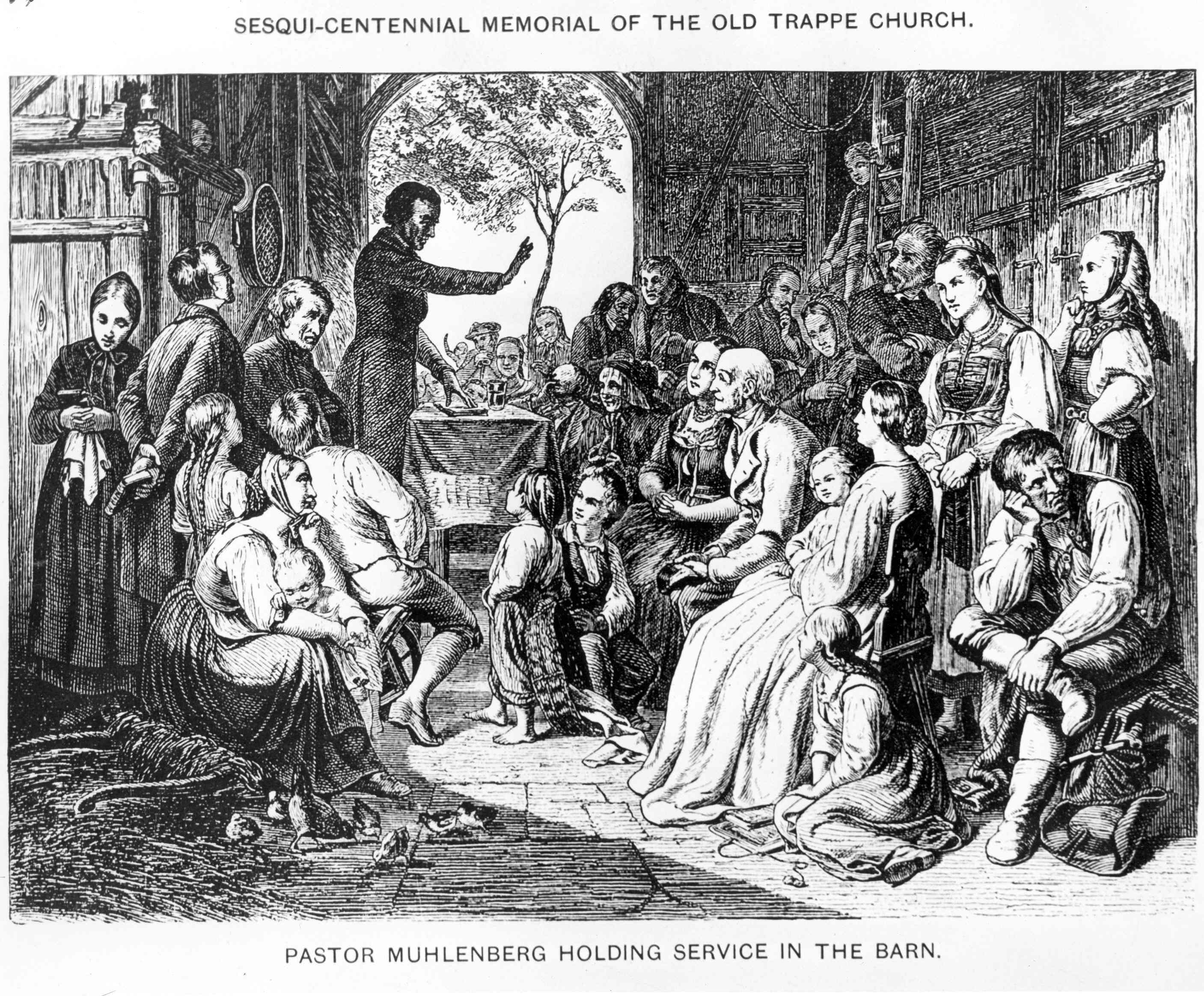
When Lutherans in Colonial America first gathered for worship, they gathered initially in barns, private homes, even vacant shops. As time marched forward, churches would be built, usually designed and constructed by the parishioners. Most were constructed of logs, few of stone or brick. But the log churches would not last long before the ground timbers began to rot and the roof would begin to leak. Amazingly, the average life of a log church was about 20 to 30 years – and it was usually easier to build a new one than try to fix the one that was rotting. Within a century a congregation might build four log churches. It is no surprise that as soon as a congregation could afford it, they would build a church made of stone or brick. The minister was often the person overseeing the entire building process. Members of the congregation might donate labor, but the pastor would be responsible to contract with masons and carpenters for the major parts of construction. The churches were usually constructed with balconies on three sides and an elevated pulpit so the pastor could be seen from all levels of the building. Pews were made of plain boards, usually with straight backs, and often enclosed. Most churches were not heated. Most had bells hung in belfries to be rung to summon people to worship, funerals, and other special events.

Often the cost of constructing a church could be reduced by erecting union churches. A union church, which we still encounter today, involves two congregations of different denominations (like Lutheran and German Reformed) sharing ownership and use of the property. The practice of building union churches was popular in the Upper Rhine Valley in Germany, and was imported along with emigrants from these parts. Some statistics from the 18th century suggest that as many as fifty percent of churches built in the colonial period were union churches. (Adapted and adopted from The Lutherans in North America, revised edition, E. Clifford Nelson)

Between Fisherville and Elizabethville in Upper Dauphin County stands a union church among the cornfields and back roads. It is a Reformed/Lutheran Union Church where the ancestors of my Paternal Grandmother are interred in their cemetery. It is a reminder of a past history of these union churches. Services are no longer held in this building, but it reminds us of our history, as Lutherans, and possibly how our Lutheran roots were established in this area. Interestingly enough, there are Lutheran churches in Elizabethville and in Fisherville. It gets me thinking that perhaps the union church predates the others, allowing the local Lutherans and the German Reformed members to build one church, save some money, and eventually build their own church building years later. It also reminds me that the Lutherans began in this country sharing resources and pastors. And in the near future, we may be in the same need – in fact many of our Lutheran brothers and sisters have reached that reality today. We are in need of a paradigm shift rather than regressing three hundred years.

Pastor Dave

Please bring bars of soap for Trinity’s Table.
August 1, 2017 — Devotions: Lutherans in North America: Synods

August 1, 2017
Devotions: Lutherans in North America: The Beginnings of Synods and Ministeriums

When Justus Falckner was ordained by Swedish clergymen as a body in the Delaware region, the fruits of this collection of ministers would lead to these same Swedish pastors forming a chapter with a Dean at the head of the group. Although not able to meet more often, this chapter did meet once a year (with some interruptions) under the chairmanship of a Dean who served to supervise the ministers and their parishes and to report to and receive instruction from the bishop in Sweden. A much looser union of German congregations in Philadelphia and Hanover would form under the name “The United Congregations”, also making appeals to their connections in Europe for additional ministers and financial support. Clergymen from other religious persuasions also met in associations of one kind or another, including some Presbyterian ministers who met in Philadelphia to organize the first American Presbytery. By 1744, German and Swedish Lutherans in Pennsylvania were looking to establish some form of church union on confessional grounds, in response to the Moravian’s push to gather all German-speaking religious bodies into a “Congregation of G-d” with monthly meetings called “Synods”. This push by the German and Swedish pastors would serve to be the beginning of some type of organizational expression by Lutherans in America.

In August 1748, Rev. Henry Muhlenberg was able to organize a meeting bringing together German Lutheran clergy and laymen. It has been deemed one of the “…most significant events in the history of the Lutheran Church in America”. Six ministers were present including the Dean of the Swedish chapter and a minister from New York. There were lay people from Philadelphia, New Hanover, Germantown, Zionsville, Bernville, Lancaster and New Holland, among others. The dedicated a new church building in Philadelphia, inquired into the condition of parishes and schools, approved a proposed form of worship and most importantly, they determined to ordain men sent from Halle who had studied theology but had been sent to Pennsylvania as catechists. One student was ordained. And, this organization would continue to meet annually with the principal purpose of the preparation and oversight of ministers to meet the growing need of Lutheran congregations. During their early years this group was called by several names: general conference, association of pastors, Synod, and Consistory. The most common name given the group was “Ministerium”.(Adapted and adopted from The Lutherans in North America, revised edition, E. Clifford Nelson)

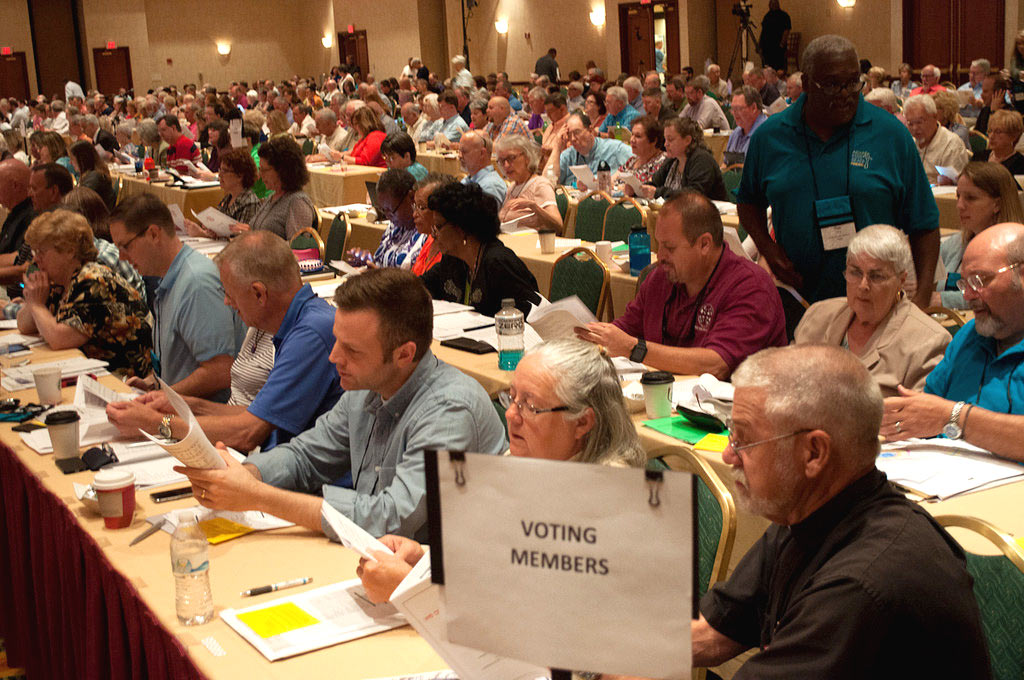
Today, Lutherans are organized into synods, like the Lower and Upper Susquehanna Synods; into conferences, like the West Shore Conference; and into smaller groups within the conferences. Our Synod is headed by a Bishop (ordained) and a Vice President (lay person). The synod holds an assembly once a year, where they decide the business of the synod, which is the collection of churches within our region. Each conference is headed by a Dean. The conferences hold meetings of rostered people, usually monthly, and discuss the various issues that exist in the individual congregations, the conference, the Synod, and the Evangelical Lutheran Church in America, or the national church body. Like each congregation is headed by an elected body of members of the church called the Church Council, the Synod also has an elected body of lay people and rostered people called the “Synod Council”. Every member of the congregation should make it their business to know the business of their church, their synod, and the national church body.

Pastor Dave

Please bring bars of soap for Trinity’s Table.