July 5, 2017 — Timeline of the Reformation: Dissolution of the Monasteries

July 5, 2017
Devotions: Timeline of the Reformation: Dissolution of the Monasteries 1536 – 40
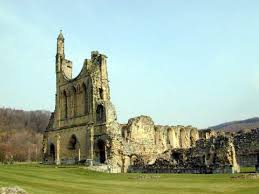
The Dissolution of the Monasteries, sometimes referred to as the Suppression of the Monasteries, was the set of administrative and legal processes between 1536 and 1541 whereby king Henry VIII disbanded monasteries, priories, convents, and friaries throughout England, Wales and Ireland. Henry the VIII not only closed them, he took their money and disposed of their assets. Much of the property was sold by Henry to finance his military campaigns. It was through his Act of Supremacy that allowed him, in his mind, to take these steps. Of course, when you make yourself the Supreme Head of the Church of England, you give yourself that authority.
The First Suppression Act of 1536 and the Second Suppression Act of 1539 spurned what Professor George W. Bernard argues:

The dissolution of the monasteries in the late 1530s was one of the most revolutionary events in English history. There were nearly 900 religious houses in England, around 260 for monks, 300 for regular canons, 142 nunneries and 183 friaries; some 12,000 people in total, 4,000 monks, 3,000 canons, 3,000 friars and 2,000 nuns. If the adult male population was 500,000, that meant that one adult man in fifty was in religious orders. (wikipedia)

By the end of the 16th Century, monasticism had almost entirely disappeared from those European states whose rulers had adopted the Lutheran or Reformed Confessions of Faith (Ireland being the only major exception); while some monasteries remained in those states that continued in the Catholic tradition. However, the religious changes in England under Henry VIII were of a different nature from those taking place in Germany, Bohemia, France, Scotland and Geneva. Across much of continental Europe the seizure of monastic property was associated with discontent among the common people, the clergy, and secular society against the powerful and the wealthy church institutions. Of course, from Henry’s perspective, he just wanted to get his own way, which was to divorce his current wife, and to be able to dispose of the next five wives, and still have a church to call home.

Today we struggle to get men and women to attend seminary in order to follow the ordained track and become ministers of Word and Sacrament, or to become consecrated to service the church in Word and Service. Henry VIII’s Act of Supremacy made him the supreme head of the Church of England and allowed him to make decrees that disbanded the Catholic Church and to strengthen his own church. In the Lutheran Church, we need to find ways to consolidate our churches to strengthen them and give the pastors who serve them hope for the future. Right now, coming out of seminary means plenty of opportunity, but not much ecclesial power to make positive change, because we are congregational churches. It will take all of us working together, and that is hard work, but with the power of the Holy Spirit behind us, it will bear much fruit in the years to come.

Pastor Dave

Please collect toilet tissue and facial tissues for Trinity’s Table.
July 4, 2017: Timeline of the Reformation: William Tyndale executed and John Calvin published his Institutes

July 4, 2017
Devotions: Timeline of the Reformation: Tyndale executed, Calvin publishes Institutes of the Christian Religion 1536

In my June 28 devotion we already addressed the work of William Tyndale. At the end of 1525 he would publish his English New Testament. As expected, the church was not happy with his efforts. There were bounty hunters and Inquisitors often looking for Tyndale. Copies of his bible were being smuggled into England and were burned as soon as any church authority could confiscate them. The church declared it contained thousands of errors as they torched hundreds of New Testaments confiscated by the clergy. Anyone found with a copy of this bible risked being burned at the stake. Tyndale’s work was denounced by authorities of the Roman Catholic Church and Tyndale himself was accused of heresy. He went into hiding and began work on a translation of the Old Testament directly from Hebrew into English. The emissaries of the King Henry VIII and Cardinal Thomas Wolsey were unable to track him down and the location of Tyndale’s hiding place remains a mystery to this day. When Henry VIII broke with the Catholic Church, the English Reformation began. This also signaled to Tyndale that possibly it was safe to return to his work in a more “open” manner. But he would soon be betrayed by a friend, Henry Phillips. On 6 October 1536, Tyndale was tried and convicted of heresy and treason and put to death by being strangled and burned at the stake. By this time several thousand copies of his New Testament had been printed. It was reported that Tyndale’s last words before his death were “Lord, open the king of England’s eyes.” Just three years later Henry VIII published his English “Great Bible” based on Tyndale’s work. Even though Tyndale’s translation of the Old Testament remained unfinished at his death, his work formed the basis of all subsequent English translations of the Bible, including the ‘King James’ version of 1611.

Calvin publishes The Institutes:


In 1536 theologian John Calvin published the first edition of what many consider is one of the greatest religious works ever written, his The Institutes of the Christian Religion. The title of the book might be better translated as “Principles of the Christian Faith”. At the age of 27, Calvin had already produced a systematic theology outlining his defense of his Reformation teachings. On his way to Strasbourg, Calvin stopped overnight in Geneva. Geneva was to be his home (except for one brief exile) until he died in 1564. Calvin was a prolific writer, like many of the Reformation theologians. He produced commentaries on almost every book of the Bible. He wrote dozens of devotional materials and pamphlets on his doctrines. He did marry, but his wife and their one son both died young. Under the influence of John Calvin, John Knox described Geneva as “the most perfect school of Christ since the days of the apostles.” (Adapted and adopted from christianitytoday.com, John Calvin Publishes Institutes of the Christian Religion; and some thoughts from wikipedia)

What is so impressive and important about The Institutes is Calvin’s systematic structure of his writing. Calvin’s first edition had six chapters, and over the years he expanded it until the final version had seventy-nine chapters. Just like Luther, and other Reformers, Calvin drew on his wide reading, and building on the work of other reformers, Calvin stated a theology and its practical application in church life.

I would suggest you find time to read some of Martin Luther’s writings in the Book of Concord, even if it is just returning once again to the Small Catechism or even the Large Catechism.

Pastor Dave
Please collect toilet tissue and facial tissues for Trinity’s Table.