
July 11, 2017: Timeline of the Reformation: Book of Common Prayer 1549

July 11, 2017
Devotions: Timeline of the Reformation: Book of Common Prayer 1549
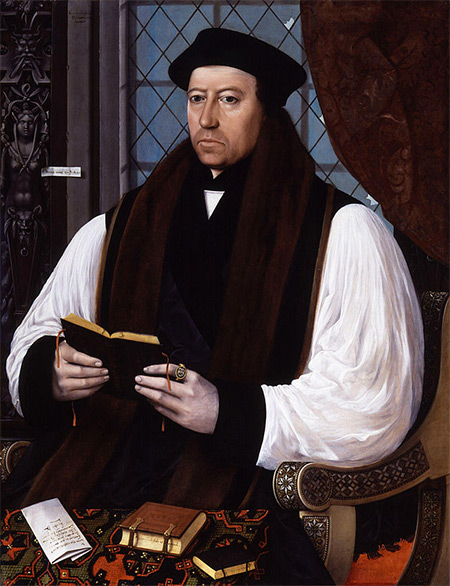
The Latin Mass was abolished by the House of Lords in England in 1549. For the first time in England, English services would be the only legal services held throughout the country – services that were to be found in the new Book of Common Prayer. The Book of Common Prayer was approved by a committee of thirteen clerics – and was written by Thomas Cranmer, a superb writer and cleric. Cranmer had been the Archbishop of Canterbury – appointed by Henry VIII at the prompting of Anne Boleyn. People who knew him called him a “quiet man of scholarly bent, and liked by most who knew him.” The Prayer Book was influenced by Lutheran services including blending into the book matins and evensong services.

The Book of Common Prayer went through many changes and adaptations over the years – sometimes made to please the Protestant critics, and sometimes made to please the Catholic critics. In fact it was revised in a more Catholic spirit in 1559, to be succeeded eventually by the 1662 Anglican prayer book, more Catholic still and the familiar one which has lasted down into this century. Among Cranmer’s innovations, retained in the new book was the requirement of holding weekly Communion services. The practice before the English Reformation was that the laity received Holy Communion on rare occasions – in some cases just one time a year. Practice, however, varied from place to place: in some churches, regular communion was very popular, in other places families stayed away or sent “a servant to be the liturgical representative of their household.” Few parish clergy were initially licensed to preach by the bishops; in the absence of a licensed preacher, Sunday services were required to be accompanied by reading one of the homilies written by Cranmer. (Adapted from The First Book of Common Prayer, historytoday.com, January 1, 1999; wikipedia)

Pastor Dave

Please collect bottles of shampoo and packages of deodorant for Trinity’s Table.
July 10, 2017: Timeline of the Reformation: Martin Luther dies 1546

July 10, 2017
Devotions: Timeline of the Reformation: Martin Luther dies 1546

Martin Luther dealt with different ailments throughout his life, and his last years were more of the same. And to add insult to injury, his daughter Magdelena passed away in 1542, just four years before his own death, and her death was hard on him. Some of his harshest writings came in the last years of his life. He was particularly harsh with the Jews and his writings had a particularly “anti-semitic” tone, including his work “On Jews and Their Lies (1543). Luther had accused the Catholic Church of being unfair to the Jews and making it difficult for them to convert to Christianity. He wrote: “I would request and advise that one deal gently with them… If we really want to help them, we must be guided in our dealings with them not by papal law but by the law of Christian love. We must receive them cordially, and permit them to trade and work with us, hear our Christian teaching, and witness our Christian life. If some of them should prove stiff-necked, what of it? After all, we ourselves are not all good Christians either.”

But by circa 1540 he was frustrated with the lack of Jewish converts. It seemed to him that God had deserted the Jews, leaving them to wander homeless without a land or temple of their own. So by 1543 he was so frustrated he wrote “On Jews…” But it should be noted that Luther did not hold the Jews responsible for the death of Christ. And even with his friends and colleagues urging him to abandon his raving against the Jews, he proposed seven measures of “Sharp Mercy” German princes could take against the Jews. It is not a part of the Luther history that we are proud of, but it is a part of the entire life that was Martin Luther. Luther continued to lead the Reformation efforts during the last years of his life, and wrote “Against the Papacy at Rome Founded by the Devil” in 1545. He also continued his preaching and teaching duties despite his poor health. His last lecture ended with the words “I am weak, I cannot go on.”

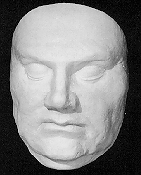
Luther set off on his last trip on January 17, 1546, to his birthplace, Eisleben to settle a dispute and the negotiations ended successfully. He would not have the energy to return to Wittenberg and died on February 18, 1546. On his death bed, he prayed “Into your hands, I command my spirit. You have saved me, Father, you faithful God.”After the coffin was displayed for two days in Eisleben, Luther’s body was transported through Halle and Bitterfeld back to Wittenberg. He was laid to rest on February 22 in the Castle Church in Wittenberg. (Luther’s Role in Religious Discussions and his Relationship to Reformers in Other Movements; http://www.luther.de; christianitytoday.com “Was Luther Anti-Semitic?”, by Eric W. Gritsch)

Pastor Dave