

July 27, 2017 — Devotions: Lutherans in North America: Rev. Henry Melchior Muhlenberg
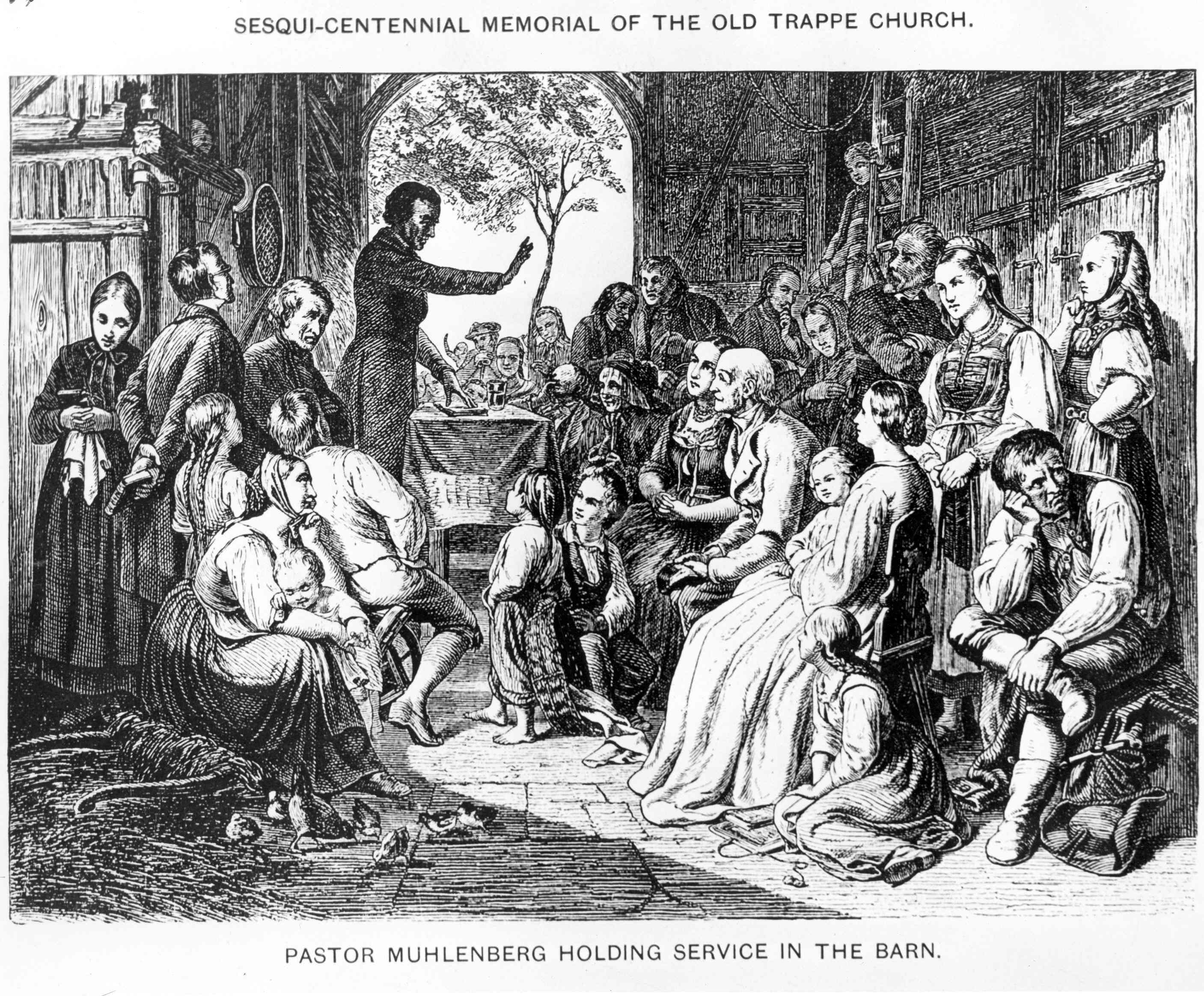
The Rev. Henry Melchior Muhlenberg was sent from Halle, in Saxony Germany in 1742 to minister to German Lutherans in Southeastern Pennsylvania. He would eventually have contact and influence with German, Dutch and Swedish Lutherans, as well as members of the Reformed, Presbyterian, Anglican, Mennonite, Baptist, and Quaker churches, among others. Muhlenberg arrived in Charleston, South Carolina in 1742 during the month of September. He went ashore and found several Lutherans, according to his journals. These people reported they were lacking spiritual nourishment including the reception of Holy Communion. Rev. Muhlenberg would spend several months sailing between Savannah, Georgia and the Carolina region until determining he was called by G-d to sail to Philadelphia, which was his original destination. A sloop arrived from Philadelphia, and after much prayer and discussion he set sail for Philadelphia in November. It would take twelve days, a lot of sea sickness and prayer before he set foot in Pennsylvania. Lutherans had long been in Philadelphia for almost one hundred years. They had been served by pastors such as Rev. John Campanius, Rev. Jacob Fabritius, Rev. Bjork and Rev. Rudman. Upon reaching Philadelphia, Rev. Muhlenberg immediately inquired about the fate of German Lutherans. He was told that many had decided to follow a certain Moravian Count Nicholas Zinzendorf; others were being served by an older pastor named Rev. John Valentine Kraft.
Count Nicholas Zinzendorf had come to colonial America as part of the “Moravian Church” calling to missionary work. Briefly stated here, the Moravians were a part of the Hussite Movement, named for the Protestant Reformer Jan Hus (John Huss) in the 15th century. The reformer Jan Hus was burned at the stake in 1415 for his teachings that advocated for the end of Indulgences (like Martin Luther railed against in his 95 Theses), Holy Communion that would include lay people receiving both bread and wine, the liturgy of the worship service spoken in the vernacular of the people (like Luther did for Lutherans), advocating for priests to be allowed to marry (like Luther was able to do) and to cease teaching the idea of purgatory. Jan Hus’ teachings found many followers in Bohemia (Czech Republic) and early followers were called Hussites. Three hundred years after the death of Jan Hus, some of his followers would flee from Saxony because of persecution in 1722 and settle in Moravia. They would become known as “Moravians”. Count Zinzendorf would allow these “Moravians” to settle on his estate since he had wanted to establish a religious community for oppressed religious minorities. Eventually they would establish a small community called Herrnhut which we shall discuss in a later devotion.
Interestingly enough, Count Nicholas Zinzendorf was raised a devout Lutheran. The count was still a Lutheran and tried to keep the Moravian refugees within the parish church. His goal was to form ecclesiolae in ecclesia—”little churches within the church”— hoping to revitalize and unify different churches into “one communion”. Zinzendorf himself moved to Herrnhut with his family. He went from house to house counseling those who needed it and created a “Brotherly Agreement” of manorial rules. He also appointed watchmen, almoners, and other caretakers. “There can be no Christianity without community,” he said. Fast forward to 1731 when Count Zinzendorf was visiting Copenhagen where he met a converted slave from the West Indies. The man was seeking someone who would go to his homeland to preach the Gospel. Zinzendorf raced back to Herrnhut to find men willing to go – two volunteered becoming the first recorded Moravian missionaries, and the first Protestant missionaries. Within two decades Zinzendorf would send missionaries around the world: South Africa, Surinam, Romania, and North American Indians. (christianitytoday.com, Nicholas von Zinzendorf, Christ-Centered Moravian “Brother”).
It was his interest in sending missionaries to the native people of North America that brought Count Zinzendorf to colonial America. And his interest in establishing Christian Associations and to “awaken” impious Lutherans in places like Pennsylvania and Delaware is why he crossed paths with Rev. Muhlenberg. Rev. Muhlenberg will work tirelessly to unite Lutherans, to eliminate “Pretender” pastors, and to bring the Word of G-d and the Sacraments to the diverse Lutherans.
Pastor Dave
Please collect bottles of laundry soap and packages of diapers (sizes 2 and 3) for Trinity’s Table.
 Lutheran Schreff