

July 25, 2017
Devotions: Lutherans in North America: First Lutheran Ordained in Colonial America – Justus Falckner
Since the Lutherans on the Delaware were so long without a replacement pastor (once Rev. Lock and Fabritius passed away) the Lutherans developed the practice of inviting laymen to read sermons called “postils”. And as we see even today, when the regularly called pastor is out of town, the people tend to stop coming to church. The situation had gotten so bad in the Delaware area that a visitor returned to Sweden to tell of their plight – requesting immediate help for the “one thousand Lutherans” on the Delaware. The request was submitted for two ministers, Swedish Bibles, Catechisms, and other religious books. In 1697 the Rev. Andrew Rudman and Rev. Eric Bjork sailed to the congregations on the Delaware. These congregations were now treated as mission churches of the Church of Sweden. Rev. Rudman settled in Philadelphia and Rev. Bjork in Wilmington. Their first actions were to replace the wooden churches, now rotting, with more permanent structures made of stone and brick. Trinity Lutheran Church in Wilmington was completed in 1699 and Gloria Dei Lutheran Church was completed in 1700. Both churches survived into the 20th century serving Episcopal congregations. By 1704 a third church was built in Swedesboro, New Jersey.
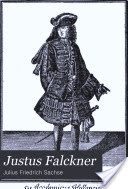
In 1702 Rev. Andrew Rudman was compelled by the Hudson River congregations to assist in the ministry of New York and Albany. He was not equal to the task and after a year he returned to Philadelphia to retire. But before he left he inquired of a young man in Philadelphia by the name of Justus Falckner. Mr. Falckner had attended and completed theological classes in Germany but had crossed the Atlantic to Philadelphia before being ordained. He was reluctant to serve the ministry of the Gospel, and so thought he could pull a Job and try to outrun G-d. But Rev. Rudman persisted in his persuasion of Justus Falckner to consider serving the congregations of New York. Writing to his former teacher August Herman Francke in Germany, Justus Falckner stated: “I am staying as a regular preacher with a little Dutch Lutheran congregation, a state of affairs which I had so long avoided.” In 1703, Falckner was ordained in Philadelphia by Rev. Rudman and two Swedish colleagues after Rev. Rudman assured him of the appropriateness of this act (the Bishop of Sweden delegated Rudman to this Episcopal Authority). Would Rev. Falckner rise to the challenge after avoiding becoming a preacher for so long? (Adapted and adopted from The Lutherans in North America, revised edition, E. Clifford Nelson)
Two situations that faced the early Lutherans in North America were the lack of steady pastors supplied by their supporting Lutheran consistories and ministeriums, and the changing landscape of language and ruling governments. Over time, the issues of language and pastoral leadership will become their most significant challenges – you know, besides encroaching on the land of native Americans, the ever-looming threat of epidemics, and the incredibly harsh landscape. However, more and more people were immigrating to colonial America and the increasing need for spiritual leadership did not cease. In time, the people would make their needs known through pleas to their supporting Lutheran bodies in Holland and Germany, and through hiring lay people to preach. There continues to be an independent streak within Lutheran congregations when it comes to following and listening to the actions of their national governing bodies. This independence was built into the congregations through the realities of the spread of Lutheranism to colonial America, and in response to the Anti-Catholic sentiment from the Protestant Reformation. When there was a need, the people were going to fill it the quickest way possible, and sometimes it meant doing their own thing. We are hard wired this way as people – and it appears, as churches.
Pastor Dave
Please collect bottles of laundry soap and packages of diapers (sizes 2 and 3) for Trinity’s Table.
 Lutheran Schreff