

July 12, 2017
Devotions: Timeline of the Reformation: Peace of Augsburg 1555
iferdin001p1
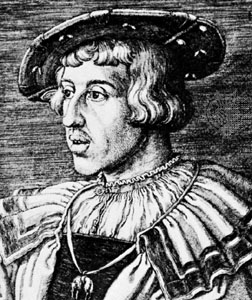
The wars and infighting had continued for many years – following events such as Luther’s excommunication in 1521 following the Diet of Worms and the Peasant’s War in 1525 – the tensions had been growing between the Protestants and the Catholics, and the Reformer’s were fracturing as well. Finally, in 1555, Charles V established a ruling called the Peace of Augsburg allowing each Prince of their state province to select either Lutheranism or Catholicism as the religion of their domain and permitted free emigration of residents who dissented. This legislation officially ended the conflict between the Lutherans and the Catholics – but it made no provision for other Protestant denominations. Charles V had initially established the Augsburg Interim in 1548 because of the religious strife – but the interim was overthrown by Maurice, the Elector of Saxony. The title of Elector carried great prestige and was considered to be second only to that of the King or Emperor. (wikipedia) Therefore, the support of an Elector such as Maurice was important. In negotiations that followed, the Peace of Passau was signed in 1552, and both the Catholics and the Lutherans were calling for a lasting peace. The Diet of Augsburg opened on February 5, 1555. Although the assembly was proclaimed by Charles V, he did not wish to take part. Instead, he empowered his brother Ferdinand to settle all questions. The Diet determined that no prince in the empire should make war against another on religious grounds and that this peace should remain operative until the churches were peacefully reunited. Only two churches were recognized, the Roman Catholic Church and the Lutherans—and only one church was to be recognized in each territory. Although the religion of the prince’s choice was thus made obligatory, those who adhered to the other church could sell their property and migrate to a territory where that denomination was recognized. (Adapted from “britannica.com, Peace of Augsburg”)
Notice that only one church was to be recognized in each Prince’s territory – one Catholic and one Lutheran. Imagine if we only had one Lutheran church to attend in each county – or in each town – or in each township. In years past, where there was one Lutheran church, when someone or a group of someone’s became disgruntled, they simply migrated down the street and built another Lutheran, or Methodist, or Presbyterian church. We have hurt our unity by our inability to work out our differences. So we need to work even harder to be united as Lutherans, Methodists, and Presbyterians when it comes to our denominational and interdenominational unity. All things are possible through Jesus Christ.
Pastor Dave
Please collect bottles of shampoo and packages of deodorant for Trinity’s Table.
 Lutheran Schreff