
June 22, 2017 — Timeline of the Reformation: Luther’s Treatises

June 22, 2017
Devotions: Timeline of the Reformation: 1520 – Luther’s Treatises — On the Freedom of a Christian
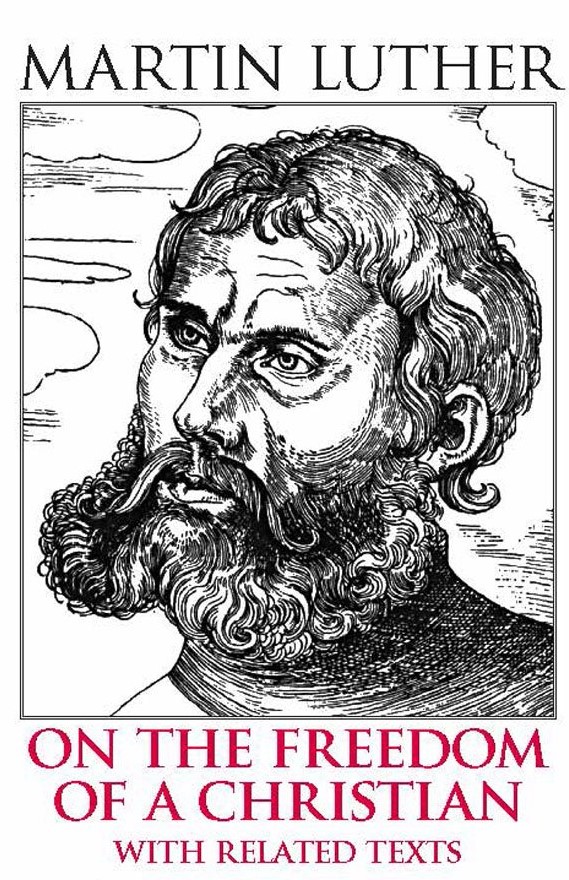
The Freedom of a Christian was actually part of a personal letter Luther wrote to Pope Leo X. He was encouraged by Karl von Miltitz to write this treatise to try to avoid the rift between the Lutheran Protestants and the Catholic Church. He sent the letter – and there was no reconciliation. The theme of the letter was Luther’s exposition on human nature and human freedom. But there were ramifications to his writing just like his treatise to “…the Christian Nobility”.

Luther put forth his famous paradox that although a Christian was completely free and was sole ruler of his own self, he is also the subject and servant of all men. Christians were free in Christ, but all people should submit to the governing authorities, especially when paying taxes. Luther made the point that even Christ told His disciples they should pay taxes to the Roman government. Through The Freedom of a Christian, Luther tried to offer an olive branch to the Pope. He tried to define his break with the Roman Church over salvation and scripture. He argued for Justification by Grace through Faith and Christian love over works. The idea of Christian liberty would eventually get Luther in trouble during the Peasant Revolt when the commoners took Luther’s religious views and tried to make them political in nature.

The social ramifications were revolutionary for the sixteenth-century. Luther put forth the radical idea that all people should be socially equal because all were equal before God. However, the times were not open to this forward-thinking view. He also advocated for providing welfare for the poor in the community.

Traces of the “Protestant work ethic” idea were threaded throughout Luther’s treatise. He declared that “man cannot be idle, for the need of his body drives him and he is compelled to do many good works to reduce it to subjection” By proclaiming that all men were equal, Luther said that all vocations were equal before God and therefore holy. There are historians who claim that early capitalism sprang from the Reformation.

The cultural ramifications were vast because Luther called for a complete change to the German way of life. Germans in the sixteenth century were known for their drunken, rowdy behavior. Luther attacked this generalization by declaring that every man should have control of his own body. Men should discipline themselves “by fastings, watchings, labors, and other reasonable discipline” so that they might better serve their fellow men. Above all, Luther called upon Christians to subject themselves to the Holy Spirit.

The overall impact of these two treatises, Address to the Christian Nobility and The Freedom of a Christian, can never truly be comprehended but it is obvious that the printing press was important in spreading his views all across Europe. His ideas like the priesthood of all believers and Christian liberty impacted other great reformers like Zwingli, Calvin, and Knox. Luther revolutionized Europe by bringing forth a Reformation that would change the known world for the rest of time. (adapted and adopted by An Analysis Of Martin Luther’s Two Treatises, July 7, 2012, Hannah S. Bowers)

Pastor Dave

Please collect one pack of diapers size 1 or 2 for Trinity’s Table.
June 21, 2017 — Timeline of the Reformation: Luther’s Treatises

June 21, 2017
Devotions: Timeline of the Reformation: 1520 – Luther’s Treatises
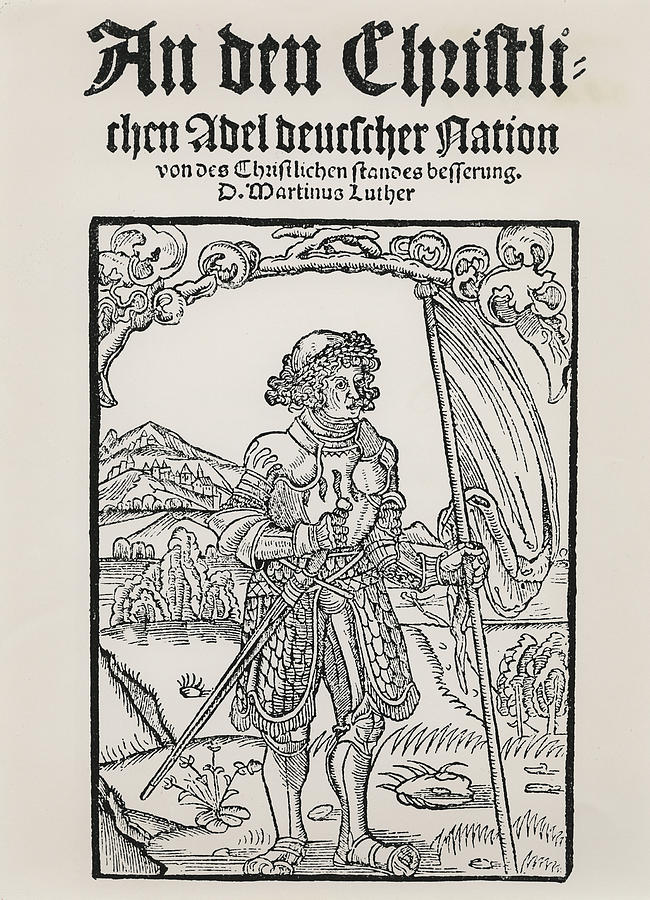
To the Christian Nobility of the German Nation

In his Address to the Christian Nobility, Martin Luther addressed his treatise to the German nobility because, he argued, only the state could reform the church. He would go on to end his treatise by listing a series of abuses which he believed should be corrected by the secular authorities, not by religious councils. The treatise was also addressed to the German nobility because Luther believed only they could reform the Roman Catholic Church which was dependent on their financial support. Luther adamantly argued that no secular issue should be delegated to papal courts but rather handled by the German nobility. Based on this premise Luther argued that the interdict should be abolished and excommunication should be used only in such cases as Scripture allows. The shift from papal power to secular power in deciding religious issues created problems later in the Reformation, specifically the question of using secular military forces to stop a new religion from forming. Another problem with Luther’s arguments resulted in his “Two Kingdoms:” the idea that church and state are separate realms with separate responsibilities.

Luther would go on to speak of the “Three Walls of the Church” in his treatise. The first wall is the distinction between spiritual and secular classes – his argument for the Priesthood of All Believers would remove this wall. Since all believers were part of the priesthood, there could be no distinction between a priest and the peasant. All were equal in the eyes of G-d. The second wall claimed that only the Pope could interpret scripture. Luther would argue that the Bible speaks to no such necessity and instead found evidence that claimed the common person could interpret scripture. The third wall was the claim that only the Pope could summon a council – which meant that no secular council could dictate orders to the church. Luther would go on to use Scripture and history to destroy this wall.

There were social ramifications to Luther’s treatise. Prior to the Reformation, Europe followed a feudal system with strict class lines. Clergy, nobility, merchants, and peasants did not mix in society. Luther revolutionized the social classes by saying that “a cobbler, a smith, a peasant—each has the work and office of his trade, and yet they are all alike consecrated priests and bishops”. He went on to say that every man was important to society just as each element was important to the body. His treatise would have economic ramifications. He attacked the Church and the German nobles for their extravagance. He argued that instead of priests and Cardinals owning vast estates, the Pope instead should allow secular rulers to own the estates so bishops and cardinals could focus on religious affairs. Luther wanted a secular council to stop the papacy from demanding indulgences and other contributions for its false wars. Luther knew that the money really went into the pope’s private coffers. Luther also believed that Germanic nobles should pass a law restricting extravagant apparel. Luther claimed that the nobles spent so much on their wardrobes that they were actually living in fiscal poverty. Although most of these economic demands would never be fulfilled, the desire for economic equality was born through the beliefs of Martin Luther. Today, Europe lives under a socialist system which strives to provide economic equality for all. The cultural ramifications were more subtle. Culturally, the people were expected to kiss the pope’s feet and treat him as a god among men. Luther ranted that such a cultural standard was “un-Christian, indeed, an anti-Christian thing”. Luther also wanted to outlaw begging in Christendom since it was detrimental to society and culture as a whole. (An Analysis Of Martin Luther’s Two Treatises, July 7, 2012, Hannah S. Bowers)

Pastor Dave

Please collect one pack of diapers size 1 or 2 for Trinity’s Table.