
June 28, 2017 — Timeline of the Reformation: The English Bible, 1525/6

June 28, 2017
Devotions: Timeline of the Reformation: The English Bible 1525/6
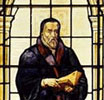
In England, according to the 1408 Constitutions of Oxford, it was strictly forbidden to translate the bible into any native tongue. The only authorized version of the bible was the Latin Vulgate, St. Jerome’s Latin Translation. William Tyndale was fluent in eight languages. Like Luther, he believed it was important for the average person to be able to read the bible and to listen to the bible in their own language. When only the educated were able to read and understand Latin, the average person was reliant on those leaders and their teachings and explanations of the scriptures. It seems that both Luther and Tyndale were unhappy with the direction of the church of their day, and so they each decided to take matters in their own hands. While seeking refuge in the castle in Wartburg, Luther took to translating the New Testament into the German vernacular. Tyndale worked in secret, often having to leave his country of England to be able to finish his work.

Luther finished his German New Testament in 1522. Tyndale would show up on Luther’s doorstep in 1525 and by the end of that year he would publish his English New Testament. As expected, the church was not happy with his efforts. There were bounty hunters and Inquisitors often looking for Tyndale. Copies of his English Bible were burned as soon as any church authority could confiscate them. The church declared it contained thousands of errors as they torched hundreds of New Testaments confiscated by the clergy. Anyone found with a copy of this bible risked being burned at the stake.

We often take our faith for granted, having been raised in a country that allows the freedom of religion. We take it for granted that we can not only buy a bible, we can buy a multitude of translations of the Bible – NIV, CEV, NRSV, KJV, NKJV, The New Living Bible Translation. For the Church of the 16th and 17th century, allowing the masses to be able to read the bible for themselves meant that the church could no longer control access to the scriptures. People could read the bible and begin to have their own insights into the Word of God. Church practices like selling indulgences and the like could be proven to have no biblical support. The authority of the church would begin to crumble as the people would begin to realize how freeing the scriptures are – especially as Lutherans began to have insight into doctrine such as Justification by Grace through Faith. The availability of the scriptures in English was an enormous threat to the church, and Tyndale would eventually be executed for his efforts. Today, there are only two known copies left of Tyndale’s 1525-26 First Edition. Any copies printed prior to 1570 are extremely valuable. Tyndale’s flight was an inspiration to freedom-loving Englishmen who drew courage from the 11 years that he was hunted. In the end, Tyndale was caught: betrayed by an Englishman that he had befriended. He was incarcerated for 500 days before he was strangled and burned at the stake in 1536. Tyndale’s last words were, “Oh Lord, open the King of England’s eyes”. This prayer would be answered just three years later in 1539, when King Henry VIII finally allowed, and even funded, the printing of an English Bible. (greatsite.com, English Bible History,)

Having heard the story of Tyndale and his effort to translate and print a bible in the English language, are you more or less inspired to set yourself on a course of consistent, persistent bible reading in the months to come?

Pastor Dave
June 27, 2017– Timeline of the Reformation: The German Bible 1522

June 27, 2017
Devotions: Timeline of the Reformation: The German Bible 1522

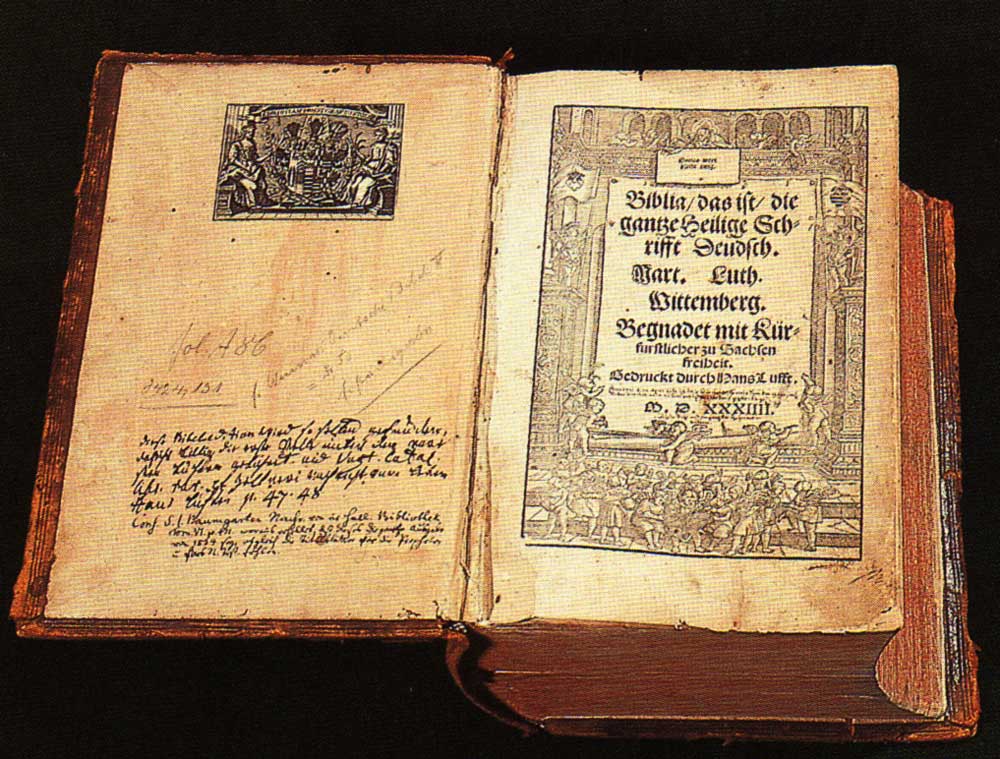
Perhaps one of Luther’s greatest achievements was translating the scriptures to form the German Bible. No other work has had as strong an impact on a nation’s development and heritage as has this Book. In Luther’s Germany, there were several regional dialects that impeded the efforts for a unified language. Through the rise of the middle class, trade and the invention of the printing press, the scene was set for Luther’s German Bible – all of which helped to unify the language. Following the Diet of Worms in 1521, Luther’s territorial ruler, Frederick the Wise, had Luther hidden away for safekeeping in the castle at Wartburg. Luther settled down and translated Erasmus’s Greek New Testament in only eleven weeks. This is a phenomenal feat under any circumstances, but Luther contended with darkened days, poor lighting, and his own poor health.

In September of 1522, Luther published his Das Newe Testament Deutzsch – the German New Testament. His Bible contained woodcuts from Lucas Cranach’s workshop and selections from Albrecht Durer’s famous Apocalypse series. His edition sold an estimated five thousand copies in the first two months alone. With the success of his New Testament, and still under the threat of excommunication, Luther turned his attention to the Old Testament. Though knowledgeable in both Greek and Hebrew, he would not attempt it alone. “Translators must never work by themselves,” he wrote. “When one is alone, the best and most suitable words do not always occur to him.”
Luther thus formed a translation committee, which he dubbed his “Sanhedrin.” His translation committee included scholars such as Philipp Melanchthon, Justus Jonas, John Bugenhagen, and Caspar Cruciger. Never before, and not for many years after, was the scholarship of this body equaled. Luther would be the principal translator. Before any word or phrase could be included, it had to pass the ear test for Luther. In other words, it had to sound right. This was the German Bible’s greatest asset, but it meant Luther had to straddle the fence between the literal and the paraphrase.

“It is not possible to reproduce a foreign idiom in one’s native tongue,” he wrote. “The proper method of translation is to select the most fitting terms according to the usage of the language adopted. To translate properly is to render the spirit of a foreign language into our own idiom. I try to speak as men do in the market place. In rendering Moses, I make him so German that no one would suspect he was a Jew.”
Luther, a relentless perfectionist who might spend a month searching out a single word, talked at length with old Germans in the different regions. To better understand the sacrificial rituals in the Mosaic law, he had the town butcher cut up sheep so he could study their entrails. When he ran into the precious stones in the “new Jerusalem” that were unfamiliar to him, he had similar gems from the elector’s collection brought for him to study. Luther longed to express the original Hebrew in the best possible German, but the task was not without its difficulties. “We are now sweating over a German translation of the Prophets,” he wrote. “O God, what a hard and difficult task it is to force these writers, quite against their wills, to speak German.” (adapted and adopted in part from christianitytoday.com, The Bible Translation That Rocked the World: Luther’s Bible introduced mass media, unified a nation, and set the standard for future translations, by Henry Zecher)

Luther did some of his most important work while he was hiding out in the Wartburg castle. He could have sat there sulking about his situation, but instead he continued to do work that would benefit the society and change the world. Even when we feel that we cannot be useful to our family or society, we can still do things that make a difference. We may not change the world, or translate the bible into another language, but staying positive when life turns negative can lead to good things.

Pastor Dave