

June 15, 2017
Devotions: The Counter-Reformation: Girolamo Aleandro
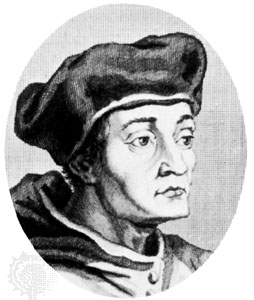
ialeand001p1
I have spent a lot of time highlighting the lives of Reformers including the Radical Reformers –now it is time to talk about those who were part of the Counter-Reformation. The Counter-Reformation was the Catholic Church’s Revival, or response to the Protestant Reformation. It was an effort toward internal renewal which may have actually began at around the time Luther was nailing the 95 Theses to the church door in Wittenberg. The Catholic Church’s response to the “Protestants” was immediate and often brutal, by 21st century standards. The Catholic Officials were certainly interested in refuting and silencing the voices of the Protestant Movement. Therefore, while efforts were happening to push back against the Reformers, other efforts were happening to address the problems within the Catholic Church.
The first Counter-Reformer we encounter is Girolamo Aleandro. He was born on February 13, 1480 and died on February 1, 1542. He was a cardinal, a humanist, and, as would be expected, an opponent of the Reformation. He worked for Pope Leo X as a librarian in the Vatican. He was present at the diet of Worms and even wrote the edict against Luther. He was responsible for the burning of two martyrs in Brussels. He was subsequently employed on various papal missions in Germany but was unsuccessful in preventing the German princes from making a truce with the reformers, or in checking to any extent the progress of the new doctrines. He was promoted to cardinal in 1536 by Paul III. (at the same time as Reginald Pole) and died at Rome on the 1st of February 1542. (britannica.com)
Council of Trent: The Council of Trent was held between 1545 and 1563 in Trent and Bologna, northern Italy. It was one of the Roman Catholic Church’s most important ecumenical councils. It was prompted by the Protestant Reformation, and has been described as the embodiment of the counter-Reformation. The decrees made at the Council of Trent were affirmed in Vatican II (circa 1962). As well as decrees, the Council issued condemnations of what it defined to be heresies committed by the Protestants and, in response to them, made key statements and clarifications to the Church’s doctrine and teachings, including scripture, the canon, sacred tradition, justification, salvation, the sacraments, the Mass and the veneration of Saints.
Pastor Dave
Please collect bottles of shampoo and packs of diapers for Trinity’s Table.
 Lutheran Schreff