

June 8, 2017
Devotions: Personalities of the Reformation: Sebastian Franck
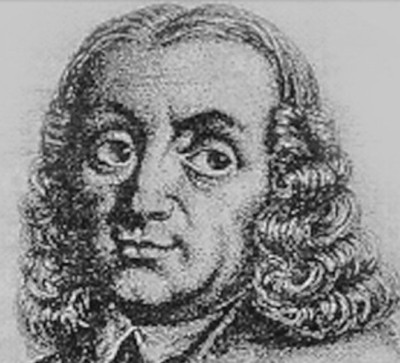
Sebastian Franck, born circa 1499 and died circa 1543 was a German Protestant Reformer, theologian, humanist, and eventually a Radical Reformer. He like many of his time was ordained a Roman Catholic Priest, but he converted to Lutheranism in 1525. He would become increasingly dissatisfied with Lutheran doctrine, and also would grow to hold in disdain the concept of an institutional church. He soon developed his own vision of an “invisible spiritual church”. Turns out Franck, like a number of his contemporaries, was a prolific writer. His first book was a German translation of a book directed against Sacramentarians and Anabaptists by Andrew Althamer. In 1528 he married Ottilie Beham, the sister of Sebald Beham, a pupil of the artist Albrecht Durer. In the same year he wrote a treatise against drunkenness. In 1529 he moved to Strassburg. Here he developed a friendship with Kaspar Schwenkfeld. In 1531 he published one of his seminal works, “Chronica: Time Book and Historical Bible”. In this book he outlined Catholic heresies and their heretics. He was imprisoned by Roman Catholic authorities and was forced to leave Strassburg. He would flee to Esslingen to make a living as a soapboiler, and then moved onto Ulm, Germany. In 1539 he was forced to leave Ulm by Lutheran critics. Franck combined his humanist teachings with his passion for freedom of the religion of the spirit. Luther would call him a “mouthpiece of the devil.” But his courage did not fail him, and in his last year, in a public Latin letter, he exhorted his friend Johann Campanus to maintain freedom of thought in face of the charge of heresy.
This would be the legacy of Sebastian Franck – his openness to religious faiths of various cultures and traditions, and his life-long opposition to the institutional church. He was one of the most modern thinkers of his time. Franck believed that G-d communicates with individuals through a portion of the divine that remains within each person. G-d was the eternal goodness and love which are found in all people, and the “true church” was composed of those who allowed the spirit of G-d to work with them. He did not view Redemption as a historical event, and considered Original Sin and the Crucifixion as symbols of eternal truth. He viewed the bible as full of contradictions, but still held eternal truths, just veiled in the message. (all portions of this devotion are adapted and adopted from newworldencyclopedia.org, Sebastian Franck, New World Encyclopedia, and wikipedia)
Sacramentarians: Those Christians during the Protestant Reformation who denied not only the Roman Catholic transubstantiation but also the Lutheran sacramental union. Historically speaking, this term often referred to Calvinist Protestants. As addressed in the Westminster Confession of Faith: “the Lord’s supper really and indeed, yet not carnally and corporally, but spiritually, receive and feed upon Christ crucified, and all benefits of his death: the body and blood of Christ being then not corporally or carnally in, with, or under the bread and wine; yet, as really, but spiritually, present to the faith of believers in that ordinance as the elements themselves are to their outward senses.”
Perhaps Franck could be considered a forerunner of the Ecumenism movement, the idea of promoting unity among the Christian churches. In fact he would not be the only one to promote unity among believers. Hans Denck (June 10 devotion) would write on the same acceptance of those who had differing views on the G-dly life. Perhaps it would stem from the persecution many of them endured in seeking a relationship with G-d.
Pastor Dave
Please collect two items of your choice for Trinity’s Table this week.
 Lutheran Schreff