

May 24, 2017
Devotions: Personalities of the Reformation: Jan Laski
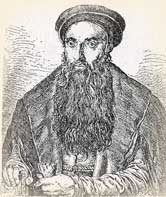
In the 15th and 16th centuries, Reformation ideas spread all across Europe, including the country of Poland. Reform ideas first came to Poland in the fifteenth century through Bohemian followers of John Hus (see May 2 devotion). Then, after the Lutheran reformation began in the sixteenth century, exiles from European countries took refuge in Poland and made converts. Lutheranism itself never became popular, however. Calvinism appealed more to the Polish nobles and commoners because it was more democratic in form. Several nobles and even King Sigismund II favored Calvinism – and one of those noblemen was Jan Laski. He traveled to France to further his education and soon cam under the influence of Zwingli, and with Desiderius Erasmus. He would spend a year with Erasmus and would cross roads with many of the Protestant reformers. Laski’s family would not support his “reformation” leanings and called him home. He would become an archdeacon. He would see up close the abuses of the Catholic church and would soon declare for the Reformation. This meant he had to flee from Poland and he would wander across Europe. He was invited to direct the church of Friesland, a northwest province of the Netherlands. He would use the methods and teachings of Calvin and made many reformations to the church there. He would collaborate with Cranmer, even have an influence on the Book of Common Prayer. When he finally returned to Poland, he brought Calvinistic reforms and translated the Bible into his native tongue.
Many in Poland would turn from the Catholic church, and some of the Catholic church buildings would be put to use by the Protestants. Laski would die on January 28, 1560. By the time of his death, Protestantism had a foothold on the people, but the protestants were divided between Lutherans, Unitarians, Hussites, Anabaptists, and Calvinists. The Roman Church remained the single largest Christian bloc and Roman clergy retained special rights in teaching religious doctrines. In the seventeenth century, religious toleration virtually ceased when the Roman Church reasserted its supremacy. (adapted from Poland Didn’t Listen Long to John Laski, by Dan Graves, MSL from the christianity.com website)
Desiderius Erasmus: he was a classical scholar and wrote in a pure Latin style. He was a humanist and has been called “the crowning glory of the Christian humanists” He would prepare Latin and Greek editions of the New Testament. He wrote On Free Will and many other influential works. Erasmus was critical of the Catholic Church abuses and would call for reform, but he would keep his distance from Luther and Melanchthon and, unlike Luther, would recognize the authority of the pope. He maintained a deep respect for traditional faith, piety, and grace, rejecting Luther’s emphasis on faith alone. Erasmus remained a member of the Roman Catholic Church all his life, remaining committed to reforming the Church and its clerics’ abuses from within. (supported by information from Wikipedia)
The Catholic church did its best to fight Protestantism at every turn – from the “contract” that was put out on Martin Luther causing him to hide out in the castle church in Wartburg, to the Counter-Reformation itself. Many, many people would die in the movement we call Protestantism. We have a lot of people to thank for the opportunity to worship as Lutherans, and Presbyterians, and Methodists, just to name a few. And many who fought the fight, did not win their individual battle, but eventually would win the war for faith.
Pastor Dave
Please bring in diapers and paper towels to donate to Trinity’s Table.
 Lutheran Schreff