

May 20, 2017
Devotions: Personalities of the Reformation: Justus Jonas
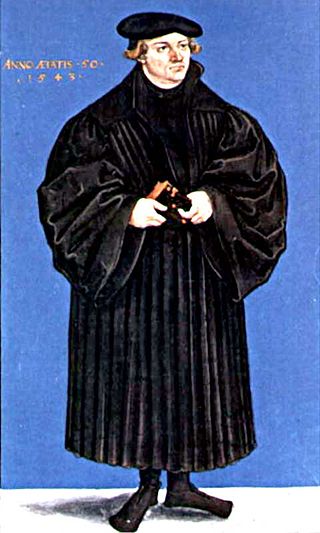
Justus Jonas, original name Jodocus Koch was born June 5/6, 1493, in Nordhausen (central Germany) and died October 9, 1555, in Eisfeld, Saxony. He was a German religious Reformer, Jurist, legal scholar and hymn writer. A colleague of Luther, he played a prominent role in the early Reformation movement, particularly at Marburg (1529) and at Augsburg (1530), where he helped draft the Augsburg Confession, a fundamental statement of Lutheran belief. He is best known for his German translation of the Latin writings of Luther and Philipp Melanchthon. An advocate of Erasmus’ Humanism, he introduced Greek and Hebrew into the curriculum on becoming rector of the University of Erfurt (1519). During Luther’s stay in the castle in Wartburg, Jonas was one of the most active of the Wittenberg reformers. Giving himself up to preaching and polemics, he aided the reformation movement by his gift as a translator, turning Luther’s and Melanchthon’s works into German or Latin as the case might be, thus becoming a sort of double of both. Jonas also assisted Luther with his translation of the Bible into the German language.
One of the eight hymns in the first Lutheran hymnal is attributed to him, In Jesu Namen wir heben an (In the name of Jesus we begin), which appeared in 1524 with four hymns by Martin Luther and three by Paul Speratus. His hymn Wo Gott der Herr nicht bei uns halt, a paraphrase of Psalm 124, was published in the Erfurt Enchiridion. It was used by several composers as a base for organ and choral music, including Bach’s chorale cantata BWV 178. Jonas was busied in conferences (including a prominent role in the Reformation conferences at Marburg (1529) and Augsburg (1530)) and visitations during the next twenty years, and in diplomatic work with the princes. In the autumn of 1531, Jonas published a German translation of the Apology of the Augsburg Confession and in 1541 he began a successful preaching crusade in Halle.
Martin Luther became severely ill and visited his friend during Christmas in 1545. Jonas was present at Luther’s deathbed at Eiselben (February 18, 1546), and preached the funeral sermon; in a procession Luther’s body was taken to Halle and buried in Wittenberg. In the same year Jonas was banished by Maurice, Duke of Saxony. From that time until his death, Jonas was unable to secure a satisfactory living. He wandered from place to place preaching, and finally died in 1553, at the age of 62.(Wikipedia, and britannica.com)
Paul Speratus: a Catholic priest who became a Protestant preacher and hymn-writer. In 1523, he helped Luther to create the First Lutheran Hymnal, published in 1524 and called Achtliederbuch.
Erfurt Enchiridion: (the second Lutheran hymnal, 1524, two editions)
Wo Gott der Herr nicht bei uns halt:
Here is the English translation of the first two verses of the hymn:
If the Lord God does not stay with us
when our enemies rage
and if he does not support our cause
in heaven high above,
if he is not Israel’s protection
and does not himself break the enemy ‘s cunning,
then all is lost with us.
What human power and intelligence contrive
should not easily terrify us;
He sits in the highest place,
he will uncover their plan.
When they attack with the greatest cunning,
then God goes another way:
It is in his hands.
Singing hymns has been an integral part of Lutheran worship since the beginning of Protestantism.
Pastor Dave
Please bring in boxes of tissues this week for Trinity’s Table.

 Lutheran Schreff