

May 15, 2017
Devotions: Personalities of the Reformation: Martin Chemnitz
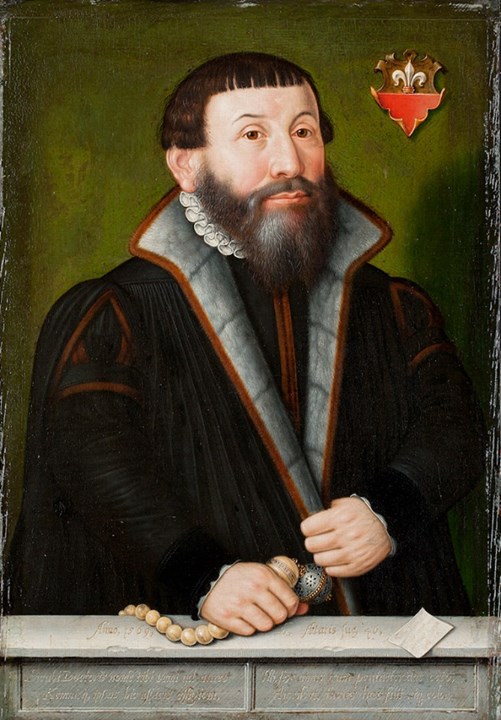
“Martin Chemnitz was born on November 9, 1522. He had to labor hard for his education, for his father died when he was a young man. In the course of time he became a student at Wittenberg where Philip Melanchthon impressed him. There was a saying from the seventeenth century that refered to Martin Chemnitz and Martin Luther – “If the second Martin had not come, the first Martin would not have stood.” It means that the writings of Martin Chemnitz rescued Lutheran theology which was being undermined by the teachings of Calvinists and Catholics alike. But, originally, Martin Chemnitz was not studying theology – he was studying math and astrology. Although the first Martin (Luther) was conducting the Reformation at the time, the second Martin (Chemnitz) paid little attention to Luther and his writings. Fortunately, Melanchthon was able to steer him toward theology. He read the works of the church fathers and the theologians of his own day. As a result, his keen mind became equipped to defend the Reformation teachings of Luther.
He engaged in theological controversy more mildly than most theologians of the day, who jeered and called each other names. Martin Chemnitz tried to allow reason and Scripture to speak for him. One of his best-known books was Loci Theologici, a commentary on Melanchthon’s theology. In it, Martin staunchly defended the doctrine of justification by faith alone, which had taken a beating, owing to a misunderstanding of what Lutherans meant by their teaching. In other writings, he defended Luther’s teaching on the Lord’s supper and the church’s ancient teaching that Jesus is both God and man.
Another important work by Martin Chemnitz was his Examination of the Council of Trent. At Trent, the Roman Catholic church restated and clarified its doctrines. In four volumes, Martin Chemnitz made a strong Protestant reply to the Roman claims. But for Lutherans, his most important contribution was his part in drafting the Formula of Concord. This was an orthodox restatement of Lutheran faith acceptable to most Lutheran factions, which had been growing apart over differences of interpretation. Martin Chemnitz died in 1586.” (Wikipedia)
“If the second Martin had not come, the first Martin would not have stood.” The writings of Martin Chemnitz rescued Lutheran theology. He quietly wrote in defense of Luther’s Justification by Faith through Grace – and was instrumental in putting together the Book of Concord, the central writings and teachings of the Lutheran Faith. He did not use the “in your face” style of apologetics (defense), instead he steadfastly and quietly worked to defend and spread the teachings of the Lutheran Protestant movement. Sometimes you need to speak loudly and carry a small pen, and sometimes you need to speak quietly but carry the big pen of defense – defending the writings and ideas of those who came before you.
Pastor Dave
Please bring in boxes of tissues this week for Trinity’s Table.
 Lutheran Schreff