

May 13, 2017
Devotions: Personalities of the Reformation – Wolfgang Capito
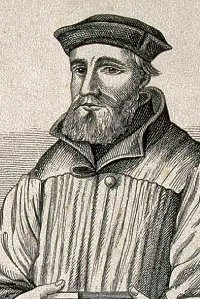
Wolfgang Fabricius Capito was born in 1478 and died on November 4, 1541 in Strousbourg. Captio was a Roman Catholic priest also found it necessary to break from his church to become a Reformer, like Bucer, like Savonarola, and like Luther in the years to come.
Capito attended the German universities of Ingolstadt and Freiburg, Capito became a diocesan preacher around 1512 in Bruchsal, Germany. He would soon meet future Reformers John Oecolampadius and Conrad Pellican and the celebrated humanist Desiderius Erasmus and Zwingli – and their influences on him would change the course of his ministry. Archbishop Albrecht of Mainz, Germany, the birthplace of Gutenberg, the inventor of the printing press, summoned him in 1519 to Mainz as cathedral preacher and later as chancellor. His conscience was torn between his Roman Catholic faith and the efforts of the Reformers and so he twice visited Martin Luther at Wittenberg. By 1523 he fully believed in their cause; he resigned his post at Mainz and went to Strasbourg, where he joined forces with Martin Bucer in reforming Strasbourg and southern Germany and in consolidating the leading German, French, and Swiss Evangelical ministers. In 1530 he and Bucer drafted the Confessio Tetrapolitana, also called the Swabian Confession, the official confession of the followers of Huldrych Zwingli and the first confession of the Reformed Church.
Unlike Bucer, Capito remained friendly to the Anabaptists, the fringe wing of the Reformation, and other dissenters complicating the Strasbourg Reformation—until 1534, when he recanted that view. His most important work is considered to be Berner Synodus, (after the synod held at Bern, Switzerland, in 1532), which deals essentially with church discipline and pastoral instruction. An active participant in several important church synods, he died of the plague in 1541.
Capito worked in one way or another with Zwingli, Bucer, Oecolampadius, Pellican, the humanist Desiderius Erasmus and Martin Luther. He was in good company in terms of the changes and reforms of the 16th century. We may not be able to have such an influence, but we can learn a lot from their struggles, their questions, and their perseverance.
Pastor Dave
Please bring in toilet paper or paper towels this week for Trinity’s Table.
 Lutheran Schreff