
May 31, 2017 — Personalities of the Reformation: Olaus Petri

May 31, 2017
Devotions: Personalities of the Reformation: Olaus Petri
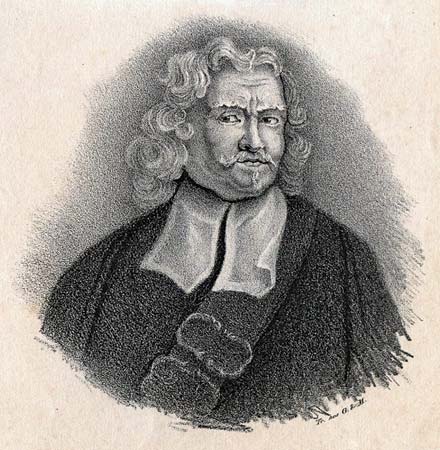
Olaus Petri (1493 – 1552), the brother of Laurentius also played an important role in the Reformation in Sweden. He studied for the Roman Catholic priesthood at the University in Wittenberg – and this put him in contact with Luther and Melanchthon. Eventually he would be persuaded by their teachings and writings and would become a Lutheran supporter. By 1523 he was known for his powerful preaching. His preaching caught the attention of King Gustav I Vasa who was intent on breaking away from the Catholic church. He soon was protecting the rights of the Lutherans in Stockholm, and he allowed Petri to marry, which of course broke Catholic law.

He would lose his favor with the king when he spoke out publicly against the kings strict policies toward the church. The king sentenced him to death, but he would only have to pay a stiff fine. He would later regain the favor of the king and was appointed a pastor in Stockholm.

Olaus Petri would produce most of the literature for the Swedish Reformation movement including a Swedish New Testament, a hymnbook, a church manual, the text for the Swedish liturgy for worship services, and many, many other writings.

Olaus Petri was buried at Storkyrkan (church in Stockholm), which became the national cathedral. Since 1898 a large plaque and statue outside Storkyrkan have commemorated the reformer. His younger brother survived him by two decades, completing the Swedish church’s alignment with Lutheran reformed practices.

In 1616, long after his death, the “Rule for Judges’ Associations” was published, which is now thought to have been written circa 1520-1540 and has long been attributed to Olaus Petri. These 42 general rules, a mixture of common law and statutes, have formed the basis of Scandinavian legal traditions, particularly in Sweden and Finland. (encyclopedia.com, The Protestant Reformation, and other accounts taken from Wikipedia)

The ELCA remembers Olaus and Laurentius Petri on April 19, the anniversary of Olaus’ death. On a more obscure note, the main character of August Strindberg’s play Master Olaf is Olaus Petri (premiered on December 30, 1881).
I don’t know if we have any other siblings who have had such an enormous impact on the Protestant Reformation – which I think is surprising. Perhaps there might have been some, but one of them was burned at the stake, or hanged, or they too were simply lost to time. One of the more familiar would be John Wesley and his brother Charles – theologians and clerics, who along with George Whitefield, founded Methodism, or the Methodist Church.
Methodism – also known as the Methodist movement is a group of historically related denominations within Protestant Christianity inspired by John and Charles Wesley, and George Whitefield who were significant leaders in this movement. It began with a revival within the Church of England during the 18th century and following Wesley’s death, became a separate denomination. The movement spread throughout the British Empire, the United States, and beyond because of vigorous missionary work today claiming approximately 80 million adherents worldwide. Wesley’s theology focused on sanctification and the effect of faith on the character of a Christian, perfection in love, the works of piety and the primacy of scripture.

Pastor Dave

Please bring in sunscreen and hand sanitizer for Trinity’s Table.
May 30, 2017 — Personalities of the Reformation: Laurentius Petri

May 30, 2017
Devotions: Personalities of the Reformation: Laurentius Petri

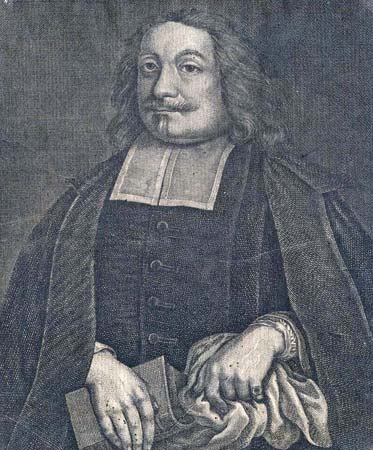
Laurentius Petri (1499 – 1573) was a Lutheran churchman, a leader of the Protestant Reformation in Sweden and the first Protestant archbishop of Uppsala (1531–73). In the following devotion (May 31) we will talk about his brother Olaus, who had a more influential impact on the Protestant Reformation. At the Uppsala Council of 1531, the Swedish King Gustav Vasa took the final step of breaking with the Roman Catholic Church by personally appointing Laurentius as the new archbishop. On September 22 that year, Laurentius was consecrated archbishop. He was archbishop for 42 years, unparalleled in Sweden, and during his time he was often in conflicts with the monarchs. In 1539 his brother Olaus was sentenced to death by the King over some arguments, and Laurentius was among those forced to sign the death sentence. It has been disputed whether Laurentius was doing this because of a weak character or if he thought it better to formally obey so that he could continue to spread the reformation ideas. Olaus did eventually get pardoned in 1542, much due to his influential friends, but he was forced to keep a low profile, leaving the role of main reformer solely to Laurentius. He married Elisabeth Didriksdotter, a daughter of the King’s cousin becoming the first Swedish archbishop to be married. His brother Olaus had already become the first priest to marry in 1525. His main contributions were his abundant writings which laid the foundation for the Swedish Church Ordinance established at the Uppsala Council in 1571.

Laurentius is responsible for translating the Bible into Swedish. It was an important piece of literature for those in Sweden – as much as Luther’s translation of the Bible into the vernacular for German-speaking peoples. His writing Kyrkoordning (which means “Church Order”) was penned in 1571, and defined the practice of the church and in particular the church’s relation to government. In this writing Laurentius speaks for the independence of the church from the crown, and independence that continued throughout the history of the Swedish Lutheran Church. (adapted and borrowed from britannica.com, Laurentius Petri, Swedish Archbishop, and wikipedia))

The Swedish reformers Laurentius Petri and his brother Olaus (which I deal with more in the next devotion) were a major influence in the establishment of Reformation ideas in Sweden. In 1526 all Catholic printing presses were suppressed and many of the Church’s tithes went to the national debt. King Gustav did all he could to move the country away from Catholic teachings and rituals in worship. The Church of Sweden became Lutheran at the Uppsala Synod in 1593 when it adopted the Augsburg Confession. At this Synod they also retained the three original Creeds: Athanasian, Apostle’s and Nicene.

Since 1994 the Church of Sweden has been part of the Porvoo Communion, (a communion of 15 northern European Anglican and Lutheran churches established in 1992), bringing it into full Communion with the Anglican churches of the British Isles and the Iberian Peninsula, together with other Lutheran churches of the Nordic nations and the Baltic states. Since 2015, the Church of Sweden has also been in full communion with the Episcopal Church of the United States.

Pastor Dave

Please bring in sunscreen and hand sanitizer for Trinity’s Table.