
April 18, 2017 — “Here I Stand — Where Do You Stand?”

April 18, 2017
Lenten Devotions – “Here I Stand” – Where Do You Stand?

Perhaps the most notable words spoken in the Reformation, this according to early printed reports, was Luther’s reply at Worms when urged to recant. He uttered the memorable lines in German on this day, April 18, 1521, and then, upon request, repeated their gist in Latin for those who did not understand his native tongue. He was sweating, said witnesses.

“Since your majesty and your lordships desire a simple reply, I will answer without horns and without teeth. Unless I am convicted by scripture and plain reason–I do not accept the authority of popes and councils for they have contradicted each other–my conscience is captive to the Word of God. I cannot and I will not recant anything, for to go against conscience is neither right nor safe. Here I stand, I cannot do otherwise, God help me. Amen.”
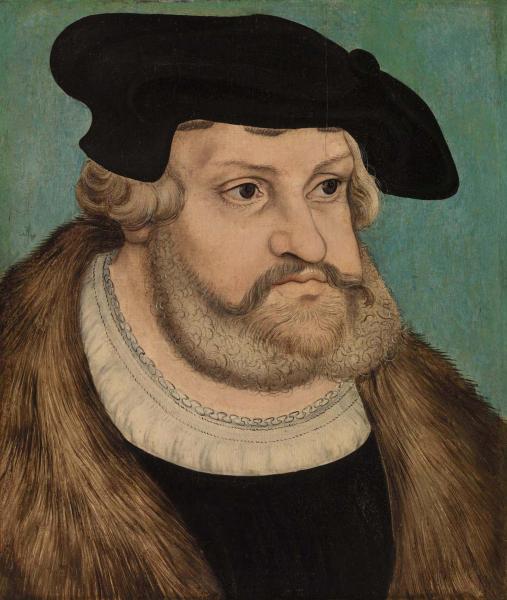
Frederick the Wise, Luther’s supporter was uneasy. Did the scriptures condemn Luther or not? “He is too daring for me,” the elector admitted. Nonetheless, on the next day, when asked to stand against Luther with the emperor, he did not sign the condemnation although the other four electors did so. As for the Emperor, he reasoned that a single friar who went contrary to the whole church could not possibly be right. Descended from a long line of Christian emperors, he felt that to accept Luther’s view was to betray the faith of his fathers. He would take prompt action against Luther, he vowed. But since Luther had been given safe conduct to Worms, he allowed him to depart in safety. Luther did not leave Worms at once. For several days a committee reasoned with him, begging him not to rend the church in two. They pointed out that war would surely come to Germany. Melanchthon, his beloved associate, might be killed. Luther could not help but be moved, but his determination held. God’s word must be followed whatever the cost. To this confrontation his stand against indulgences had finally brought him. There are grounds to doubt that Luther said “Here I stand. I cannot do otherwise.” Although the earliest printed versions contain these lines, the official transcripts do not. Whether spoken or not, the words convey the brave monk’s attitude. When Luther left Worms, the Reformation was irrevocable.” (Martin Luther’s Most Noble Words, Dan Graves, MSL, christianity.com website)

This year, 2017, we remember the events of the Reformation, and in particular the nailing of the 95 Theses on the church door in Wittenberg by Lutheran Priest and professor Martin Luther. This single event has been identified as the beginning of the movement called the Reformation – one of the single most important events in European history. Our friend Luther stood firm when faced with opponents who wanted him to recant his writings, his teachings, and his faith. He refused to recant. It brought him condemnation, but also moved a generation toward the epiphany of Grace through faith, not works. Where do you stand, in your faith and for your faith.

Pastor Dave
April 17, 2017 — Rev. Reorus Torkillus

April 17, 2017
Lenten Devotions – Rev. Reorus Torkillus

“On this date, April 17, 1640, Rev. Reorus Torkillus, a pastor and professor from Gottenberg, Sweden, arrived in the area that was to become the United States. He arrived about twenty years after Rev. Rasmus Jensen died in the Hudson Bay area. The Lutheran Church was the State church of Sweden, and the Swedish rulers were interested in providing for the spiritual needs of the colonists and the Indians. He was 41 years old when he landed in Fort Christiana. Torkillus held services in the fort, and shared oversight of the colonists with a Calvinist preacher, Herr Christopher, with whom he maintained friendly relations. Reverend Torkillus died at Fort Christian three years after his arrival.

Torkillus was followed by Rev. John Companius who only spent six years in New Sweden but had a far-reaching ministry. He translated Luther’s catechism into the Delaware Indian tongue and constantly worked among the native population. Rev. Eric Bjork emigrated from Sweden in 1697 to establish a pastorate at Fort Christina. In 1698 he began construction on Holy Trinity Church. Today the building is a national historic landmark and is recognized as the oldest Protestant place of worship still in use in North America.

The Lutherans in New Sweden and the other American colonies perpetuated the major themes of Luther’s Reformation –Salvation by grace alone, through God’s own initiative, received by faith alone, apart from human merit; and based on the Scripture alone as the norm and standard for Christian teaching.

It is now more than 360 years since the first Lutheran pastor came to America.” (christianity.com website, Reorus Torkillus, a Lutheran in America Diane Severance, Ph.D. and Dan Graves, MSL)


Three hundred and seventy-seven years ago, in 1640, a Lutheran pastor came to America (what would be called America) to do the work of the Lord. It goes beyond my imagination what it must have been like to serve Christians in such a situation. I have read the personal diaries of the Reverend Henry Melchior Muhlenberg and marveled at the “day in the life” of a pastor in the 1700’s. Who was Henry Melchior Muhlenberg?

“Henry Melchior Muhlenberg, the Patriarch of North American Lutherans, was a Lutheran pastor who traveled from Germany to North America as a missionary to build up what we now know as the American Lutheran Church. He was born in 1711 in Einbeck, Germany. Having studied theology at the University of Goettingen and languages and music at the University of Halle, Henry Melchior Muhlenberg is now considered by historians to be the father of American Lutheranism. Muhlenberg arrived in Philadelphia in 1742. At the time, local Lutheran congregations didn’t have any form of central organization and were mainly found in a few dispersed communities consisting of various national backgrounds. There were already visible signs of disharmony and dispute within these communities, which led Muhlenberg to start building up Lutheran churches within the region right away. His efforts were soon recognized and he was named Senior Lutheran Pastor in North America by German, Swedish, and other Lutheran churches.” (visit-luther.com, Welcome to Luther Country)

His diaries speak of the inability to cross the Susquehanna River due to heavy rain falls. He was paid whatever the local congregations could scrape together. He did this, like Reverend Reorus Torkillus, with a mind toward serving others in the name of Christ. In this day of abundance, and comfort, may we move out of our comfortableness to find ways to serve those who face the wildernesses of their lives.

Pastor Dave