
April 28, 2017 — Benito Mussolini

April 28, 2017
Benito Mussolini executed
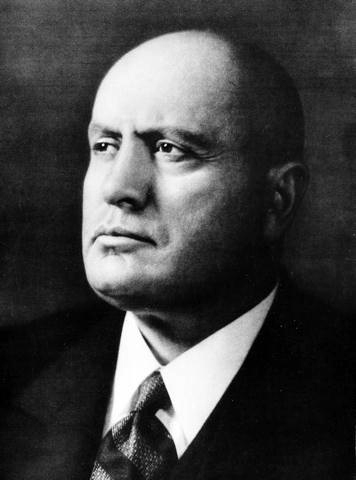
On this day in 1945, “Il Duce,” Benito Mussolini (1883 – 1945) and his mistress, Clara Petacci, are shot by Italian partisans who had captured the couple as they attempted to flee to Switzerland. The 61-year-old deposed former dictator of Italy was established by his German allies as the figurehead of a puppet government in northern Italy during the German occupation toward the close of the war. As the Allies fought their way up the Italian peninsula, defeat of the Axis powers all but certain, Mussolini considered his options. Not wanting to fall into the hands of either the British or the Americans, and knowing that the communist partisans, who had been fighting the remnants of roving Italian fascist soldiers and thugs in the north, would try him as a war criminal, he settled on escape to a neutral country.

He and his mistress made it to the Swiss border, only to discover that the guards had crossed over to the partisan side. Knowing they would not let him pass, he disguised himself in a Luftwaffe coat and helmet, hoping to slip into Austria with some German soldiers. His subterfuge proved incompetent, and he and Petacci were discovered by partisans and shot, their bodies then transported by truck to Milan, where they were hung upside down and displayed publicly for revilement by the masses. (History.com website)

Italian dictator Benito Mussolini (1883-1945) rose to power in the wake of World War I as a leading proponent of Fascism (Robert Paxton, a professor emeritus of social science at Columbia University in New York who is widely considered the father of fascism studies, defined fascism as “a form of political practice distinctive to the 20th century that arouses popular enthusiasm by sophisticated propaganda techniques for an anti-liberal, anti-socialist, violently exclusionary, expansionist nationalist agenda.”). Originally a revolutionary Socialist, he forged the paramilitary Fascist movement in 1919 and became prime minister in 1922. Mussolini’s military might made Italy predominant in the Mediterranean region, though he exhausted his armed forces by the late 1930s. Mussolini allied himself with Hitler, relying on the German dictator to prop up his leadership during World War II. He died trying to escape.

Why should we lift up a fascist dictator like Mussolini or the failed military campaign of death and destruction like Hitler’s? We remember their hate and their attempts at death and extermination so that we do not allow such leaders to attempt similar atrocities in the future. Those who repeat the failures of the past are those who fail to remember them for the future. It will only be with G-d’s help and the efforts of people of faith lead by the Holy Spirit that we will succeed in remembering not to forget.

This week please collect bottles of house cleaner for Trinity’s Table.

Pastor Dave
April 27, 2017 — John Milton

April 27, 2017
John Milton, Paradise Lost

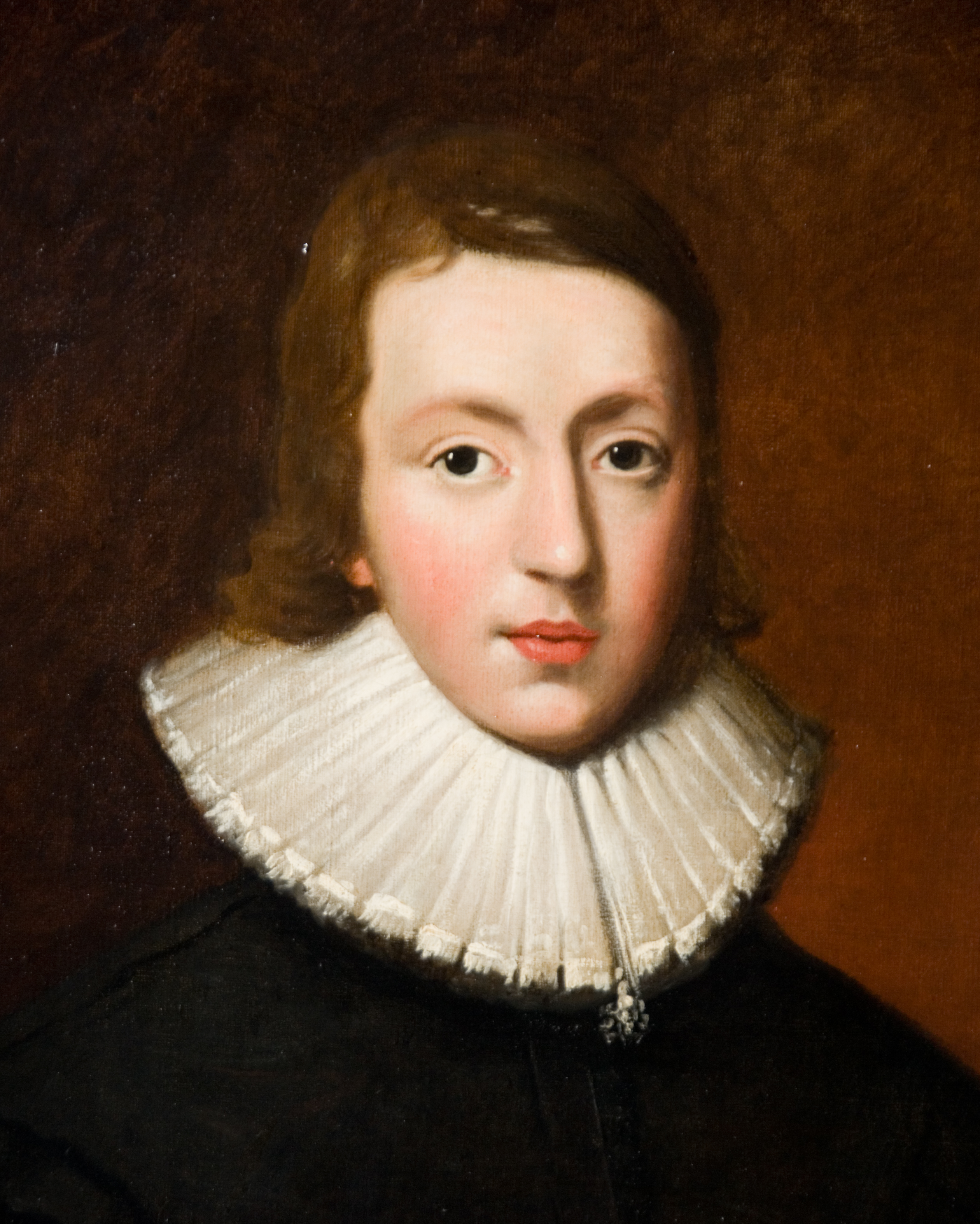
On this day, April 27, 1667, Milton sold the most magnificent epic in the English language, conveying the rights for Paradise Lost to Samuel Simmons.

“Paradise Lost is an epic poem in blank verse by the 17th-century English poet John Milton (1608–1674). The first version, published in 1667, consisted of ten books with over ten thousand lines of verse. A second edition followed in 1674, arranged into twelve books (in the manner of Virgil’s Aeneid) with minor revisions throughout and a note on the versification. It is considered by critics to be Milton’s major work, and it helped solidify his reputation as one of the greatest English poets of his time. The poem concerns the Biblical story of the Fall of Man: the temptation of Adam and Eve by the fallen angel Satan and their expulsion from the Garden of Eden. Milton’s purpose, stated in Book I, is to “justify the ways of God to men”. (wikipedia)

Paradise Lost was not published until August 20th. Despite this inauspicious start, it would become ranked by many next to the Bible. The blind poet’s lofty narrative required twelve books to tell. He dealt with the highest dramatic events known to us: the rebellion of Satan and the fall of man, both of which he accepted as literal facts. He shows Adam and Eve naive of evil and delighted with the garden of Eden; their sin and consequent woe; and God’s promise of eventual restoration of all things through Jesus Christ. Milton presented his epic in blank verse, knowing that rhymes would make it trite and weary the ear in that vast span of words. The majesty of iambic pentameter would best suit his conception. Theological truths which would not easily bear rhyme would work well with an unobtrusive alliteration. For example, God says of Adam and Eve:
“. . .they themselves decreed their own revolt, not I. If I foreknew, Foreknowledge had no influence on their fault.”
It is remarked that Milton achieved his finest effects depicting the rebel Satan. A Puritan, Milton participated in the revolt against Charles I. No doubt this helped him frame the sentiment he ascribed to Satan: “Better to reign in Hell than serve in Heav’n.” Try as he will to pervert God’s purpose, however, Satan is ultimately thwarted; evil is transformed by God into the means for good.
“Who seeks to lessen thee,
against his purpose serves
To manifest the more thy might: his evil
Thou usest, and from thence creat’st more good.”

To write such lines, Milton must have meditated long on Joseph’s words to the very brothers who had sold him into slavery: “You intended it for evil, but God meant it for good, for the saving of many lives.” (Milton’s Ten Pound Epic Dan Graves, MSL, christianity.com)

“But Joseph said to them, “Do not be afraid! Am I in the place of God? Even though you intended to do harm to me, God intended it for good, in order to preserve a numerous people, as he is doing today. So have no fear; I myself will provide for you and your little ones.” Genesis 50:19-21
G-d can use all situations for the good of people, the good of creation, and the good of the church. In our limited understanding, we sometimes wonder why: “why did G-d do this?”, “why did G-d allow that?”, and “why did G-d abandon me?” We only see the individual trees that block our vision and impede our paths. G-d sees from the vantage of eternity – something we just cannot fathom – we just need to trust that G-d knows best, and hopes the best for all of G-d’s creatures. We just need to remember that we are not in Paradise…..yet. But one day, we will be.

This week please collect bottles of house cleaner for Trinity’s Table.

Pastor Dave