
April 6, 2017 — Ivan Prokhanov

April 6, 2017
Lenten Devotions — Ivan Prokhanov

On this day, April 6, 1924, Ivan Prokhanov, a member of the Molokan sect in Russia, died in Berlin.

“The Molokans were a Russian sect dating from the late 18th century. Molokans believed the Bible was the soul’s guide for salvation and rejected the rituals, icons, fasts, ornate churches, and worship of relics that were common in the Orthodox Church. They were called Molokans or “milk people” because they drank milk during Orthodox fasts. The government sent many Molokans to the Caucasus. One such family was the Prokhanovs. In 1869, Ivan Prokhanov was born into this heritage. When he was about ten years old, Ivan fainted and lay lifeless. A doctor pronounced him dead, and he was placed in a coffin. But as the elders read the Bible over him, preparing to bury him, Ivan opened his eyes and began to cry. In 1886, he took up a New Testament and saw Christ’s claim, “I am the Way, the Truth, and the Life, no man comes to the Father but by me,” (John 14:6). He read Paul’s words, “For me to live is Christ, to die is gain,” (Philippains 1:21). He sought forgiveness for his unbelief and thanked God for salvation. Ivan wanted to be useful to the Russian people. He studied mechanical engineering at the Institute of Technology in St. Petersburg. At the same time, he taught children and preached. His meetings had to be kept secret, because religious gatherings were illegal outside the Orthodox Church. Ivan was convinced that the Russian people needed spiritual reform more than anything else. He produced an illegal Christian magazine. He established a Bible school and organized youth groups. Two years before his death he wrote, “As I look back, analyzing the events of the past fifteen years, I cannot but see that every incident, every hindrance, even persecution and imprisonments, served definitely and positively for the growth of the Evangelical Christian Movement in Russia….” (Death of Ivan Prokhanov, One of the Milk People, Dan Graves, MSL based on a draft by Diane Severnac, Christianity.com)

“Do not let your hearts be troubled. Believe in God, believe also in me. In my Father’s house there are many dwelling places. If it were not so, would I have told you that I go to prepare a place for you. And if I go and prepare a place for you, I will come again and will take you to myself, so that where I am, there you may be also. And you know the way to the place where I am going.” Thomas said to him, “Lord, we do not know where you are going. How can we know the way?” Jesus said to him, “I am the way, and the truth, and the life. No one comes to the Father except through me.” John 14:1-6

Jesus said, “I am the Way and the truth and the life”. Ivan Prokhanov came to understand a truth “..to live is Christ, to die is gain”; he found new life through Christ; and therefore he understood that the Way to eternal life was through Jesus. And so he found ways to live the Christ-like life, like producing an illegal Christian magazine, establishing a Bible school, organizing youth groups, and other ways to follow his call.

If we believe that Jesus is the “Way, the truth and the life”, then we need to listen for the Holy Spirit calling us, and also to find ways to live out our calling as we seek to live the Christ-like life.

This week collect one roll of paper towel to bring in for Trinity’s Table.

Pastor Dave
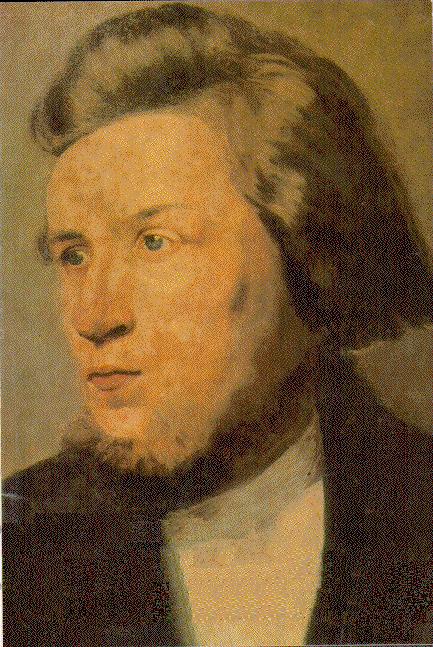
April 5, 2017 — Hans Nielsen Hauge

April 5, 2017
Lenten Devotions – Hans Nielsen Hauge

When Hans Nielsen Hauge was nearing the age of twenty-five, he felt there could be a lot more to his life, especially his Christian life. Suddenly, on this day, April 5, 1796, while singing “Jesus, I Long for Thy Blessed Communion,” he was filled with divine joy. “…my mind became so exalted that I was not myself aware of, nor can I express, what took place in my soul. For I was beside myself.

“Hauge left his parent’s home to spread the gospel through Norway. This task was made harder by the fact that the established church was afraid of enthusiasts and had forbidden all religious services (under the Conventicle Act) except those under the supervision of regularly posted clergymen. Consequently, Hauge spent much time in jail. Some of his incarcerations lasted several months. But although men sought to thwart him, God so endorsed Hauge’s preaching with the power of the Holy Spirit that spiritual renewal followed wherever he went. Often this was accompanied by economic renewal, for Hans was gifted with many skills and strong business-sense and helped Norway’s peasants develop industries. Eventually he won the support of several bishops. However, he was once held in prison from 1804-1814 although all charges against him fell through. His enemies (among them certain godless bishops) called for his death.” (Suddenly Hauge Found Living Faith, Dan Graves, Christianity.com)

Hauge worked as a lay preacher at a time when such activity was forbidden by law. The Conventicle Act of 1741 prohibited any religious meetings not authorized by the state church: a response to radical Pietism (emphasis on individual piety and living a vigorous Christian life) within Norwegian cities. The act decreed that religious gatherings could be held only under the supervision of a state approved minister. The pastor was thought to be the only person who could correctly interpret the teachings of the state church. Hauge came to feel that he had a call which made it mandatory for him to break this law and proclaim the word of God despite what the state church believed. According to Hauge’s views, the State Church failed to provide parishioners with a personal religious experience. Hauge’s religious teachings were therefore viewed as attacks on the state church and its ministers.

He…is regarded as the founder of Norwegian Pietism. Norwegians immigrating into the United States brought Hauge’s teachings with them, influencing Lutheranism in the New World. (H)e himself died in 1824 at the relatively young age of 53. His last words, spoken with a face that shone with light, were, “O Thou eternal, loving God!” (Suddenly Hauge Found Living Faith, Dan Graves, Christianity.com)

Hauge was a staunch advocate of the idea of the priesthood of all believers, as was Luther. He felt that people had to be awakened to a consciousness of their sins before they could begin to gain salvation through the G-d’s grace, which Luther tried mightily, but failed. In his struggle to understand his sins, and enumerate them, Luther could not find a G-d who loved him. But once he understood that justification came first from Jesus, that G-d acted first in loving him through the cross of Jesus, then he could believe and know that he was simultaneously a Saint and Sinner, both loved and still a sinner in need of Grace. And that then moves us to do good works, not so that G-d loves us, but because G-d loves us.

This week collect one roll of paper towel to bring in for Trinity’s Table.

Pastor Dave