

April 10, 2017
Lenten Devotions – Nestorius
Nestorius was consecrated bishop of Constantinople on this date April 10th, 428. His elevation to this influential position had profound repercussions for the church. A firm opponent of the Arian heresy, he was accused of falling into a contrary error.
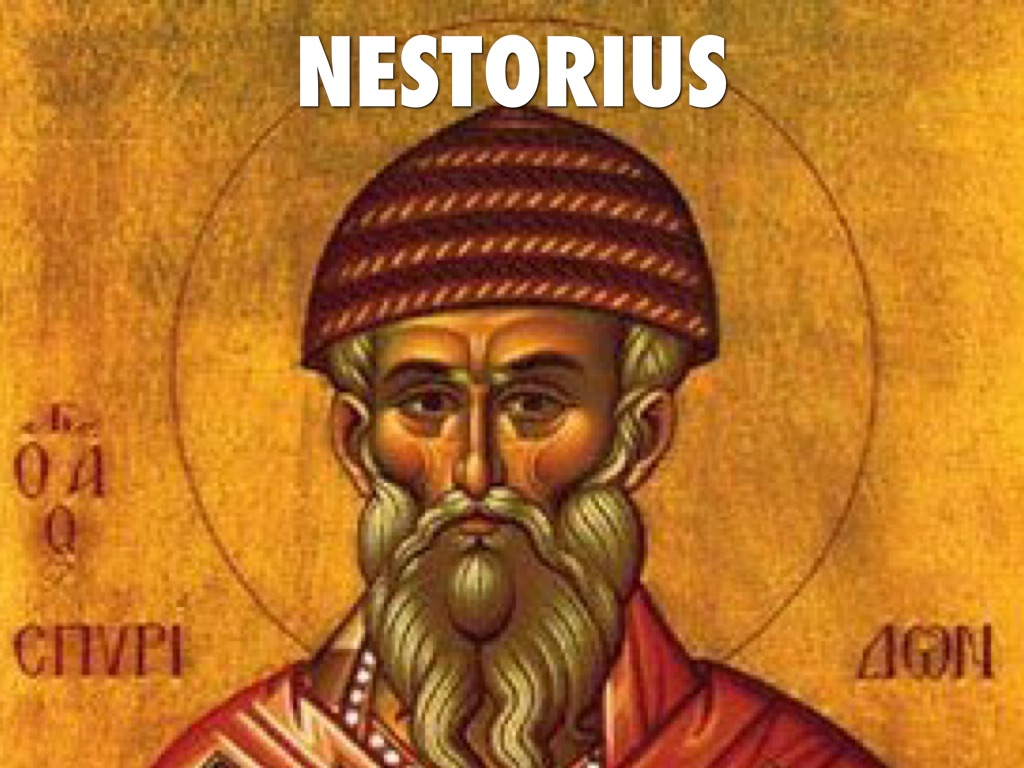
Arians taught that Christ was a created being. To refute this and other points, Nestorius argued that the Godhead joined with the human rather as if a man entered a tent or put on clothes. Instead of depicting Christ as one unified person, Nestorius saw him as a conjunction of two natures so distinct as to be different persons who had merged.
Nestorius refused to call Mary the “Mother of God.” Her baby was very human, he said. Jesus’ human acts and sufferings were of his human nature, not his Godhead. To say Mary was Mother of God was to say God had once been a few hours old. “God is not a baby two or three months old,” he argued.
He never denied that Christ was divine. On the contrary, it was to protect Christ’s divinity that he argued as he did, lest it be lost in worship of the human child. The divine nature could not be born of a woman. Nestorius’ refusal to use the term “theotokus,” Mother of God, led to a big argument. He pointed out that the apostles and early church fathers never employed the word. But he could not resolve the issue so as to bring into focus the Jesus we know from scripture who is completely and truly both God and man.
Cyril, the patriarch of Alexandria, condemned Nestorius’ works by issuing twelve anathemas against him. Nestorius responded in kind. The two men were harsh individuals and fierce antagonists. There was no chance of reconciliation. Emperor Theodosius II called a council at Ephesus to settle the question. Working quickly, Cyril and his allies deposed Nestorius before his Syrian supporters could reach the council site. Rome backed Cyril’s move and Nestorius was stripped of his position and exiled. Theologians who study Nestorius’ writings today say that his opinions were misrepresented and probably were not heretical.” (christianity.com website)
Here are two of the anathema’s written by Cyril:
1. If anyone will not confess that the Emmanuel is very God, and that therefore the Holy Virgin is the Mother of God, inasmuch as in the flesh she bore the Word of God made flesh [as it is written, “The Word was made flesh”] let him be anathema.
2. If anyone shall not confess that the Word of God the Father is united hypostatically to flesh, and that with that flesh of his own, he is one only Christ both God and man at the same time: let him be anathema.
Understanding how Christ is both human and divine simultaneously is one of the greatest mysteries and theological discussions of the several millennia. How he is both will one day be revealed. Until then, we worship a Christ who is both – fully human and fully divine.
Please collect a tube of toothpaste for Trinity’s Table to bring on Easter Sunday morning.
Pastor Dave
 Lutheran Schreff