
March 7, 2017 — Is Lent About Testing or Teaching?

March 7, 2017
Lenten Devotions – Is Lent about Testing or Teaching?

“Do not put the Lord your God to the test, as you tested him at Massah.” Deuteronomy 6:16

When we encounter a text like this, one of the first questions we must ask is: “What happened at Massah?” In Exodus 17, the Israelites have been traveling in the Desert of Sin, and they are thirsty. They quarrel with Moses saying “Why have you brought us out of Egypt to have us die of thirst?” The Lord tells Moses to take his staff and strike a rock, and water will come forth. Moses names the place Massah and Meribah because the Israelites quarreled and because they tested the Lord.
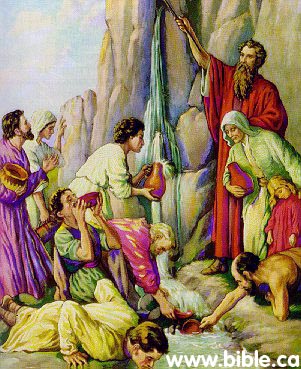
The bible is clear that we are not to put the Lord to the test – Jesus will use this argument against Satan while Satan is testing and tempting him in the wilderness. So when we consider a Lenten discipline to follow each season of Lent, there needs to be some thought as to what we choose to do. Will we be testing ourselves, you know testing our faith, or will we be seeking to learn a lesson about our faith?

“In the ancient church, Lent was a time for new converts to be instructed for baptism and for believers caught in sin to focus on repentance. In time, all Christians came to see Lent as a season to be reminded of their need for penitence and to prepare spiritually for the celebration of Easter. Part of this preparation involved the Lenten “fast,” giving up something special during the six weeks of Lent (but not on Sundays, in some traditions.) Let me be very clear: Lent is not a requirement for Christians. Dallas Willard has said that if a certain spiritual discipline helps you grow in God’s grace, then by all means do it. But if it doesn’t, don’t feel like you must do it. I’d say the same about Lent. If it helps you prepare for a deeper celebration of Good Friday and Easter, if it allows you to grow in God’s grace, then by all means keep it. If Lent isn’t your cup of tea, then don’t feel obligated to keep it. You should realize, however, that millions of Christians – Catholic, Orthodox, Protestant, and Independent – have found that recognizing the season of Lent enriches our worship and deepens our faith in God. See if the Spirit of God guides you to something. If nothing comes to mind, I’d recommend that you read a chapter of a gospel each day. If you start with Mark, you’ll have time to read all of Mark plus all of one other gospel during Lent.” (How Lent Can Make a Difference in Your Relationship with God, by Rev. Dr. Mark D. Roberts, patheos website)

So, whatever it is that you choose to do for Lent, and even if you choose to do nothing, use these 40 days to do something – you know, doing nothing “IS” doing something. But why do nothing? Take some time to learn something about yourself, or to teach yourself something about your faith. You have forty days – why miss this opportunity real learning?

Pastor Dave

March 6, 2017 — What is Happening?

March 6, 2017
Lenten Devotions – What is Happening?

“Bomb threats forced evacuations at Jewish schools and community centers in 11 states Monday, with the Jewish Community Center Association confirming threats in states ranging from Florida to Michigan. In Ann Arbor, Mich., police gave the all-clear after a Hebrew day school was threatened, forcing students to leave. “Today, bomb threats were called into schools and/or JCCs in Alabama, Delaware, Florida, Indiana, Maryland, Michigan, New Jersey, New York, North Carolina, Pennsylvania and Virginia,” the JCC Association of North America says. “Many affected institutions have already been declared clear and have returned to regular operations. All previous bomb threats to JCCs this year were determined to be hoaxes.” “My instincts tell me this is all part of a coordinated effort,” an Ann Arbor police detective tells Wells, saying that there have been at least two bomb threats against the Ann Arbor Jewish Community Center. The Anti-Defamation League says there have been reports of bomb threats at a wide range of locations in and around New York, including “three in Staten Island, one in New Jersey, one on Long Island, one in Westchester.”

The threats come after a weekend in which vandals damaged approximately 100 headstones at a Jewish cemetery in Philadelphia — an act that came less than a week after a similar attack on a Jewish cemetery near St. Louis, where more than 150 graves were targeted. Since the start of 2017, dozens of bomb threats have been made against Jewish community centers; this is at least the fifth wave of threats in the past two months.” (Bomb Threats Made Against Jewish Community Centers In 11 States, February 27, 2017, Bill Chappell)

What is our response when we hear of these despicable acts? How do we respond? How should we respond? In his Lenten letter to the congregations and individual members of the Lower Susquehanna Synod, Bishop Jim Dunlop wrote:
“For the 40 days of Lent, from March 1 to Easter Sunday on April 16, I call upon Lower Susquehanna Lutherans to engage in a time of study and prayer about hatred and intolerance that has found new vigor and expression in our culture in recent times. I invite Lower Susquehanna Lutherans to:
-Daily read or watch or listen to the news for reports of vandalism, graffiti, assault or speech that demeans or harms others based on their identity. Write them down and add to the list every day. In each case, pray for healing and comfort for the victims, and for the perpetrators that God’s Holy Spirit would turn their heart and minds towards love of neighbor.
-Form or deepen relationships with others of different religions, ethnicities or sexual orientations. Listen to their stories with respect and an open mind.
-Engage in a Lenten “fast” from judgment and negativity towards others, especially those who are different from you. Ask God to help you love your neighbor as yourself.
-Study resources, either alone or in a group, that help explain the history and systemic causes of oppression, prejudice and hatred.

-Speak up and act out against hatred and prejudice. Talk with others about what you have learned and what you become aware of. Write letters and make calls to your government officials. Plan a temple talk or forum in your church. Write a blog or Facebook posts to challenge inaccurate or misleading assumptions.

Pastor Dave