On This Date — February 14, 269

February 14, 2017
St.Valentine

“On this day, February 14, 269 a young man named Valentine was executed in Rome for his faith (maybe). If he was in fact executed on this day in February, it was the day before the pagan festival to the goddess Februata Juno – a ritual that involved sexual promiscuity between boys and girls. So the question we must consider for this holiday we celebrate called Valentine’s Day is: was the legend of Valentine modified to replace the pagan holiday? Probably. The church has done this before. The truth is that there may have been two or three martyrs named Valentine who died in different parts of the Roman Empire at around this time. Here are some examples:

“…the Roman Valentine… A city gate on the Flaminian Way and a chapel near it were named for him. Several ancient Christian writers mention his name. There is no doubt he lived and was tortured before being beaten with clubs and beheaded. And yet we have no sure account of why. Some say this Valentine was a young man with a tender heart who aided Christians who were undergoing martyrdom. He was not even a Christian at the time. Arrested for his activities, he converted to faith while in prison and would not renounce it. Knowing he was going to die, he wrote letters to his friends saying “Remember your Valentine.” Another legend says that the Roman Valentine was a priest who defied the Emperor Claudius’s temporary order and secretly married couples so the husbands wouldn’t have to go to war. Claudius desperately needed more soldiers and did not appreciate this interference. A third legend says the Roman Valentine was a priest who refused to sacrifice to pagan gods. Imprisoned for this, he gave testimony in prison and through his prayers the jailer’s daughter was healed. On the day of his execution he left her a note signed “Your Valentine.” (Christianity.com website, Martyrdom of St. Valentine, Dan Graves)

During the middle ages it was a popular belief that birds paired up in mid-February. This may also be a reason that romantic love was associated with Valentine’s name. Whatever the truth behind the legends, St. Valentine’s Day has become a day we connect with romance and friendship. Here is a poem by E. E. Cummings for you to consider and ponder on this Valentine’s Day. It is titled love is more thicker than forget:

love is more thicker than forget — more thinner than recall
more seldom than a wave is wet — more frequent than to fail

it is most mad and moonly — and less it shall unbe
than all the sea which only — is deeper than the sea

love is less always than to win — less never than alive
less bigger than the least begin — less littler than forgive

it is most sane and sunly — and more it cannot die
than all the sky which only — is higher than the sky

Pastor Dave
On This Date – February 13, 1743

February 13, 2017
Joseph Banks, Botanist

“And God said, “Let the waters under the sky be gathered together into one place, and let the dry land appear.” And it was so. God called the dry land Earth, and the waters that were gathered together he called Seas. And God saw that it was good. Then God said, “Let the earth put forth vegetation: plants yielding seed, and fruit trees of every kind on earth that bear fruit with the seed in it.” And it was so. The earth brought forth vegetation: plants yielding seed of every kind, and trees of every kind bearing fruit with the seed in it. And God saw that it was good. And there was evening and there was morning, the third day.” Genesis 1:9-13

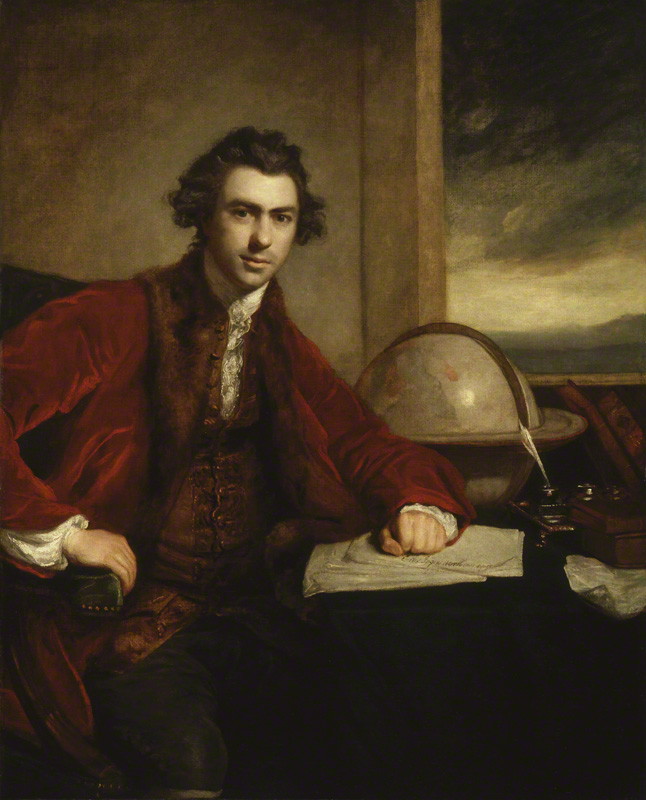
by Sir Joshua Reynolds, oil on canvas, 1771-1773

by Sir Joshua Reynolds, oil on canvas, 1771-1773

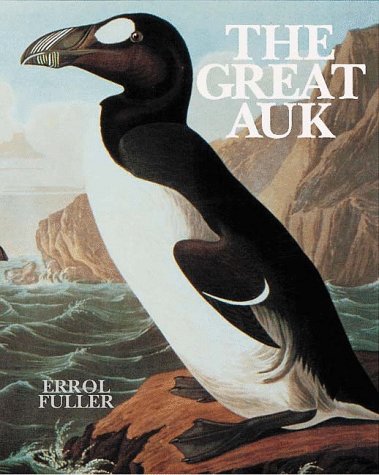
On this day, February 13, 1743 British botanist and explorer Joseph Banks was born. In 1766 Banks was elected to the Royal Society, and in the same year, at 23, he went aboard the frigate HMS Niger to Newfoundland and Labrador with the intent to study their natural history. He made his name by publishing the first descriptions of the plants and animals of Newfoundland and Labrador. Banks documented 34 species of birds, including the great Auk (a flightless bird of the alcid family that became extinct in the mid-19th century).

great-auk

Banks was a major supporter of the internationalist nature of science, being actively involved both in keeping open the lines of communication with continental scientists…and in introducing the British people to the wonders of the wider world. He was honored with many place names in the South Pacific: Banks Peninsula on the South Island, New Zealand; the Banks Islands in modern-day Vanuatu; the Banks Strait between Tasmania and the Furneaux Islands; Banks Island in the Northwest Territories, Canada; and the Sir Joseph Banks Group in South Australia.
The great auk was a food source for early humans including the Neanderthals about 100,000 years ago, as evidenced by well-cleaned bones found by their campfires. Images believed to depict the great auk were also carved into the walls of caves in Spain over 35,000 years ago and cave paintings 20,000 years ago in France.

Although not a beautiful bird, the Great Auk was a significant part of the physical and spiritual lives of people for thousands of years. The Great Auk, like all other species of mammals, animals, plants, and creatures was a creation of G-d – and thus carried inherent value before it was hunted to extinction. We must always be seeking to be good stewards of the earth and all living things that inhabit this planet because G-d has called us to do just that. Everything that exists is holy because everything comes from G-d. If we simply use what G-d has given us, and are not also good stewards, we will soon see the extinction of many other species of plant and animals – which I believe G-d would agree would not be GOOD.

Pastor Dave