
On This Date — February 22, 1680

February 22, 2017
Thomas Goodwin, pastor and author

On this date, February 22, 1680, Thomas Goodwin died. His last words are reported to be “Ah, is this dying? How I have dreaded as an enemy this smiling friend.”
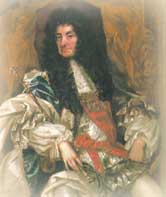
thomas-goodwin

“When Thomas Goodwin was born in 1600, he was a premature baby. Consequently, his health was rather shaky. But since his godly parents hoped to see him in the pulpit, rather than farming or soldiering, bodily weakness was not a serious impediment to his future. The couple provided their son with the best education they could afford, and it paid off. At thirteen he went to Christ’s College, Cambridge University, where he did very well in his studies. Proud of his abilities, his whole thought was how he might turn them to personal advantage. He seemed destined to become another professional clergyman of the type that is scholastically brilliant but spiritually arid.

Instead, he became a Puritan great, a man who influenced his own generation through his preaching; and future generations through his printed works. Alexander Whyte, a famed Scottish preacher, tells what his discovery of Goodwin meant: “In those far-off years I read my Goodwin every Sabbath morning and every Sabbath night. Goodwin was my every Sabbath-day meat and my every Sabbath-day drink. And during my succeeding years as a student, and as a young minister, I carried about a volume of Goodwin wherever I went. I read him in railway carriages and on steamboats. I read him at home and abroad. I read him on my holidays among the Scottish Grampians and among the Swiss Alps. I carried his volumes about with me till they fell out of their original cloth binding, and till I got my bookbinder to put them into his best morocco. I have read no other author so much and so often. And I continue to read him till this day as if I had never read him before.” (christianity.com, Goodwin Found Death a Smiling Friend, by Dan Graves)

“Lord,” Martha said to Jesus, “if you had been here, my brother would not have died. But I know that even now God will give you whatever you ask.”
Jesus said to her, “Your brother will rise again.” Martha answered, “I know he will rise again in the resurrection at the last day.” Jesus said to her, “I am the resurrection and the life. The one who believes in me will live, even though they die; and whoever lives by believing in me will never die. Do you believe this?” “Yes, Lord,” she replied, “I believe that you are the Messiah, the Son of God, who is to come into the world.” John 11:21-27

Some of the great people of faith have been people we have never nor will ever hear about. Thomas Goodwin is a good example. He was born premature, which in the 17th century should have been a death sentence. But he forged his way through life to become a pastor and apparently excellent preacher. His final words, be they apocryphal or not, are the words of a man dying with trust in his faith. I should hope I might say something so profound when I die:

“Is this death? How I have dreaded as an enemy this smiling friend”. When you die in the faith, when you put your complete trust in the resurrection of Jesus Christ, then death is not something to be feared – but after a life well lived, it can be a welcome friend.

Pastor Dave
On This Date — February 21, 1595

February 21, 2017
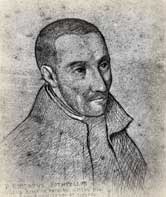
Robert Southwell, poet

On this date, February 21, 1595, poet Robert Southwell was hanged and quartered for treason.

robert-southwell

“The death of Robert Southwell on this day, February 21, 1595 dramatizes the fact that neither high birth, sincerity, poetic gifts, nor a sweet disposition can protect one from persecution. Chances are, if you have seen Southwell’s name at all, it has been attached to the poem “The Burning Babe” in an English literature anthology. The Christmas Babe is none other than Christ, who says:

As I in hoary winter’s night stood shivering in the snow, Surpris’d I was with sudden heat which made my heart to glow;
And lifting up a fearful eye to view what fire was near, A pretty Babe all burning bright did in the air appear;

Who, scorched with excessive heat, such floods of tears did shed, As though his floods should quench his flames which with his tears were fed.
“Alas!” quoth he, “but newly born, in fiery heats I fry, Yet none approach to warm their hearts or feel my fire but I!
My faultless breast the furnace is, the fuel wounding thorns, Love is the fire, and sighs the smoke, the ashes shame and scorns;
The fuel Justice layeth on, and Mercy blows the coals, The metal in this furnace wrought are men’s defiled souls,
For which, as now on fire I am to work them to their good, So will I melt into a bath to wash them in my blood.”
With this he vanish’d out of sight and swiftly shrunk away, And straight I called unto mind that it was Christmas day.

Shakespeare read Southwell’s poems and Ben Jonson said he would gladly destroy many of his own if he might thereby have written Southwell’s best. The creator of “The Burning Babe” was born in England around 1561 to an old Catholic family. His grandfather had been a prominent man in Henry VIII’s court and the family remained among the elite of the land. So beautiful was Southwell as a boy that a gypsy stole him. He was soon recovered by his family and grew into a short, handsome man, with gray eyes and red hair. Even as a child, Southwell distinguished himself by his strong attraction to the old religion. As he grew older, his love for Catholicism remained. Under English Protestantism it was a crime for any Englishman ordained as a Catholic priest to remain in England more than forty days at a time. Southwell flouted this law. In order to keep English Catholicism alive, William Allen opened a school at Douai, where he made a Catholic translation of the Bible, the well-known Douai version. Southwell attended this school and asked to be admitted into the Jesuit order. At first the Jesuits rejected his application, but eventually his earnest appeals moved them to accept him. He was ordained a priest in 1584. Two years later, at his own request, he went as a missionary to England, well knowing the dangers he faced. Spies reported Southwell’s arrival in England. Although he lived mostly in London, he traveled in disguise and preached secretly throughout England. His downfall and capture came about when Anne Bellamy, a Catholic girl, betrayed him to Richard Topcliffe, a notorious agent of the anti-Catholic persecution.” (Conscientious Poet Robert Southwell, Dan Graves, Christianity.com)

I read that poem by Southwell and I cannot help but feel the passion he had for the Christian faith. I wish I could write prose like that. Just let it sink in……

Pastor Dave