

February 10, 2017
Joseph Lister, Surgeon
“During Paul’s first imprisonment in Rome, he wrote to the believers in Colosse and identified Luke (the Gospel writer) as: “the beloved physician” (Col. 4:14). Reading through the Gospel of Luke and the Book of Acts in Greek, one is struck with the abundant use of medical terminology in these books (Hobart 1882; with words of caution from Marx 1980a: 168-172). Luke is the only gospel writer that recorded Jesus’ statements about physicians.

“Physician, heal yourself!” (Luke 4:23). “Those who are well have no need of a physician, but those who are sick” (Luke 5:31). He also extended “professional courtesy” to his fellow doctors when he recounted the events surrounding the woman with the issue of blood for twelve years. John Mark writes, “Now a certain woman had a flow of blood for twelve years, and had suffered many things from many physicians. She had spent all that she had and was no better, but rather grew worse” (5:25-26). Dr. Luke toned his account down in an almost clinical statement about the inability of the woman to get healed: “Now a woman, having a flow of blood for twelve years, who had spent all her livelihood on physicians and could not be healed by any” (8:43). (Luke The Physician: with “Medicine for the Souls”, by Gordon Franz, January 23, 2014)
On this day, February 10, 1912, Joseph Lister died. He is known as the surgeon who persisted to associate germs with infection and high death rates post surgery. His research taught him that killing germs would save lives and allow surgeons to operate inside bodies.
“Before he turned sixteen, Joseph had made many dissections under the microscope and announced he would become a surgeon. His surprised mother did not discourage him, although no one else in the family had ever entered that profession. Friends and family wondered if he wasn’t too kind-hearted and shy to handle the terrible screams he would hear and the pain and pus he would witness. Joseph became a doctor partly because he was a Quaker. Quakers were forbidden to enter Cambridge or Oxford universities where law and other professions were taught. “Godless” London University was the only great institution in England that opened its doors to a Quaker, so Joseph studied there. While still a student there, he authored a pamphlet on the “Use of the Microscope in Medicine” using a microscope given him by his father. (His father, J. J. Lister, a wine-distiller, was co-inventor of the compound microscope.) With the discovery of chloroform, surgical pain was reduced. Even so, more than half of all patients died from gangrene after they were operated on. Dirty conditions allowed germs to infect them. Joseph Lister became a good surgeon through careful study and hard work. He pioneered the use of “catgut” ligatures (actually the intestines of cows or sheep). But his greatest contribution was to show that infections were caused by germs. A friend had shown him an article by Louis Pasteur. Lister hunted for something that would kill germs while not injuring body tissues. He discovered that carbolic acid (phenol) kills germs. Its use greatly decreased death rates after surgery. However, the wet carbolic acid made a doctor’s hand’s raw during surgery and bandages soaked in it irritated patients’ skin, making them miserable, which is why hospitals today try to create aseptic conditions instead– that is, to isolate the patient from germs.” (Christianitytoday.com, Joseph Lister, by Dan Graves)
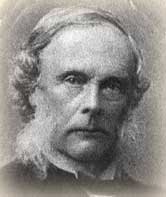
Did you have surgery lately? If you did, and you came through it will little infection or discomfort, then you can thank Joseph Lister for the sanitary conditions in which your operation was completed. Today, one of the rising concerns in operating rooms and patients alike are the increased number of infections that seem to follow patients as they recover. But in the time of Joseph Lister, infections were the number one killer of people post-surgery. There was not yet the understanding of germs and how they were the cause of gangrene and other infections. There were no sanitary practices for operating rooms, surgical equipment, or doctors themselves. I guess it was by chance that Lister had such an interest in using a microscope at an early age. Using the microscope in his study and practice of medicine helped in the understanding of germs. Thanks to the world’s increase in knowledge, not only in medicine and medical technology but also our understanding and need for the Gospel Medicine of Jesus Christ, we not only have a better life now, but new life in the age to come in the kingdom of G-d.
Pastor Dave
 Lutheran Schreff