

February 24, 2017
President of Andrew Johnson, vote for impeachment
On this date, February 24, 1868, the US House of Representatives votes to impeach President Andrew Johnson by a vote of 126 to 47.
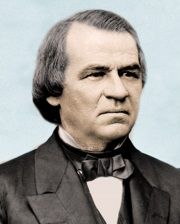
“The House of Representatives…decided to impeach the president, charging him with “high crimes and misdemeanors” as required by the Constitution. After becoming president following the assassination of Abraham Lincoln, Johnson wanted to complete Lincoln’s plan to reunite the country swiftly. The Civil War (1861-1865) had just ended. His plan was to promote passage of an amendment outlawing slavery, then allow the Confederate states to once again send representatives to Congress and govern themselves. Johnson, however, lacked Lincoln’s good judgment. While Congress was in recess, the newly powerful Southern states passed “Black Codes,” limiting the rights of freed slaves. An angry Congress proposed a law that would repress those codes; Johnson vetoed it. Congress in return, on April 9, 1866, passed the first override in U.S. history, protecting the civil rights legislation. And on it went. Johnson was charged with breaking the law, among other things. During his trial before the Senate (where impeachment hearings are held, according to the Constitution), the charges were shown to be so weak that seven Republicans refused to convict the Democratic president. The votes thus fell one short of the two-thirds necessary for conviction. Johnson did not attend his trial. When he heard the results, the president broke into tears.” (americaslibrary.gov, Vote to Impeach Andrew Johnson)
The impeachment of Johnson was the first of an incumbent President since the office of the president was created. As mentioned above, the impeachment was the culmination of a lengthy political battle pitting Johnson and the Republican majority in Congress. The disagreement was over how best to deal with the Southern states following the civil war, and Johnson’s veto of Congress’ attempt to halt illegal legislation passed by the Southern states – a piece of legislation passed by those states to limit the rights of freed slaves. Congress passed the Civil Rights Bill. Johnson vetoed it. Congress mustered the 2/3 majority needed to override the veto. There would not be another attempt to impeach a President for 106 years.
This all happened in 1866. Have we resolved all arguments over civil rights in America? Of course not. As should be the case, the discussion of civil rights continues in this country, resulting in a variety of laws passed in the 21st century around same sex marriage and transgender issues, among other important issues facing our country. The more we stay in the conversation with one another, the more we will be able to discuss issues and find ways to make sure the civil rights of all people are held in the highest regard. Must we always agree? Again, of course not. But as long as our discussions remain “civil”, then maybe the rights of all people will be upheld.
Pastor Dave
 Lutheran Schreff