

February 13, 2017
Joseph Banks, Botanist
“And God said, “Let the waters under the sky be gathered together into one place, and let the dry land appear.” And it was so. God called the dry land Earth, and the waters that were gathered together he called Seas. And God saw that it was good. Then God said, “Let the earth put forth vegetation: plants yielding seed, and fruit trees of every kind on earth that bear fruit with the seed in it.” And it was so. The earth brought forth vegetation: plants yielding seed of every kind, and trees of every kind bearing fruit with the seed in it. And God saw that it was good. And there was evening and there was morning, the third day.” Genesis 1:9-13
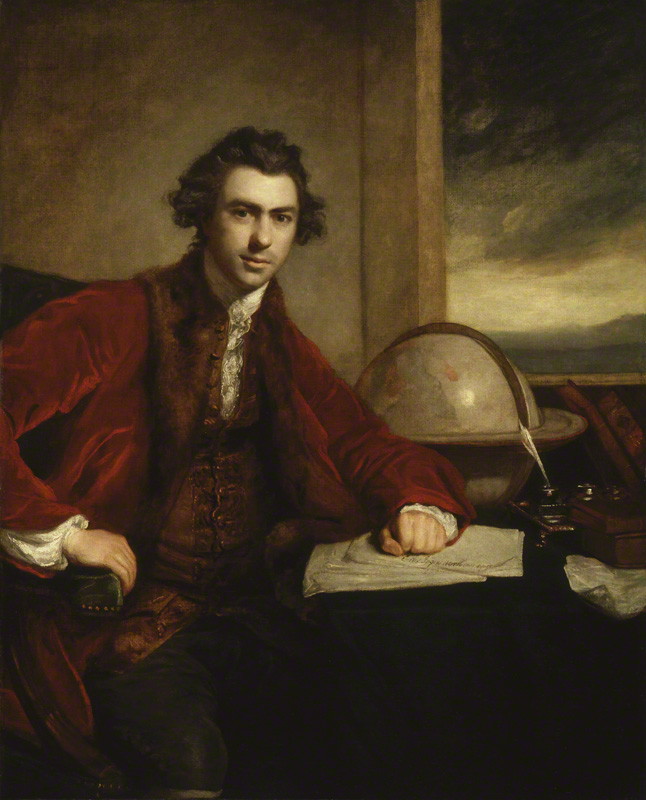
by Sir Joshua Reynolds, oil on canvas, 1771-1773
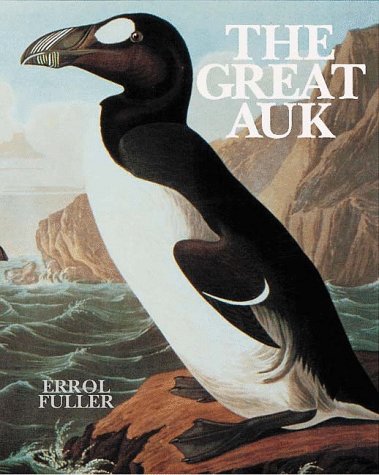
On this day, February 13, 1743 British botanist and explorer Joseph Banks was born. In 1766 Banks was elected to the Royal Society, and in the same year, at 23, he went aboard the frigate HMS Niger to Newfoundland and Labrador with the intent to study their natural history. He made his name by publishing the first descriptions of the plants and animals of Newfoundland and Labrador. Banks documented 34 species of birds, including the great Auk (a flightless bird of the alcid family that became extinct in the mid-19th century).
Banks was a major supporter of the internationalist nature of science, being actively involved both in keeping open the lines of communication with continental scientists…and in introducing the British people to the wonders of the wider world. He was honored with many place names in the South Pacific: Banks Peninsula on the South Island, New Zealand; the Banks Islands in modern-day Vanuatu; the Banks Strait between Tasmania and the Furneaux Islands; Banks Island in the Northwest Territories, Canada; and the Sir Joseph Banks Group in South Australia.
The great auk was a food source for early humans including the Neanderthals about 100,000 years ago, as evidenced by well-cleaned bones found by their campfires. Images believed to depict the great auk were also carved into the walls of caves in Spain over 35,000 years ago and cave paintings 20,000 years ago in France.
Although not a beautiful bird, the Great Auk was a significant part of the physical and spiritual lives of people for thousands of years. The Great Auk, like all other species of mammals, animals, plants, and creatures was a creation of G-d – and thus carried inherent value before it was hunted to extinction. We must always be seeking to be good stewards of the earth and all living things that inhabit this planet because G-d has called us to do just that. Everything that exists is holy because everything comes from G-d. If we simply use what G-d has given us, and are not also good stewards, we will soon see the extinction of many other species of plant and animals – which I believe G-d would agree would not be GOOD.
Pastor Dave
 Lutheran Schreff