

February 11, 2017
Caedmon, Anglo-Saxon Christian Poet
“Trust in the Lord with all your heart, and do not rely on your own insight.
In all your ways acknowledge him, and he will make straight your paths.
Do not be wise in your own eyes; fear the Lord, and turn away from evil.
It will be a healing for your flesh and a refreshment for your body.” Proverbs 3:5-8
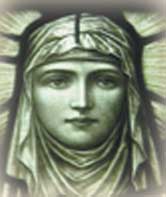
On this day, February 11, 680 it is believed Caedmon, the first Anglo-Saxon Christian poet died. It is on February 11 that the Christian church celebrates the Feast Day of Caedmon.
“He was a stable-hand at the monastery of Whitby in the seventh century. The Anglo-Saxons loved singing. It was common for men to gather of an evening and share tales through song. Everyone was expected to contribute. Caedmon, however, slipped away because he was either too shy to sing or simply had nothing to share. According to the church historian Bede, who was born about seven years before Caedmon died, Caedmon slipped out of the hall one night to tend the animals while the others sang. Afterward, he fell asleep. A man spoke to him in a vision, saying, “Caedmon, sing me something.” Caedmon replied that he could not sing. That was why he was out here, not in the hall. “Yet you could sing,” said the man, and suggested Caedmon sing “the beginning of all things.” In his dream, Caedmon began to sing his great Hymn of Creation:
Now let us praise the guardian of the heavenly kingdom,
the power of the Creator
and the counsel of His mind,
the works of the Father of glory:
how He, the eternal Lord, originated every marvel…
When Caedmon awoke, he found he remembered the verses perfectly and was able to sing them. The monks were convinced he had been given a gift by God.
Caedmon was the first poet to produce vivid Christian verses in the Anglo-Saxon tongue. Unfortunately, only a few of his lines survive. He died around 680. The people of England remembered him as a saint. His feast is on this day, February 11.” (Christianitytoday.com, Caedmon, 1st Anglo-Saxon Christian Poet)
The Old Testament is filled with poetry – and not just in the Psalms, Proverbs or Lamentations. Poetry appears throughout the texts of the Torah and the Prophets, etc. Isaiah 5 is a good example:
Let me sing for my beloved – my love-song concerning his vineyard:
My beloved had a vineyard – on a very fertile hill.
2 He dug it and cleared it of stones, and planted it with choice vines;
he built a watchtower in the midst of it, and hewed out a wine vat in it;
he expected it to yield grapes, but it yielded wild grapes. (Isaiah 5:1-2)
There is so much poetry in the pages of the bible, and these verses give us a glimpse of the creativity of the ancient writers. We do have many ways to express our love and devotion to G-d – and we even see the examples of these expressive writings in our liturgy for worship. I, for one, miss using the Song of Simeon, or as it is called the “Nunc Dimittis” presented here from the “Book of Common Prayer”:
Lord, now lettest thou thy servant depart in peace according to thy word.
For mine eyes have seen thy salvation,
Which thou hast prepared before the face of all people;
To be a light to lighten the Gentiles and to be the glory of thy people Israel.
A good devotional practice for all Christians is to journal your feelings for G-d – your questions, your epiphanies, and your struggles. As you write, you may find trying different ways to give expression to your words. Here’s a little ditty I have written just for you…
I came to worship on a bleak winter’s morn,
My mood was dark, I was feeling forlorn;
But the sermon did lift me beyond this cloud
As I sang and worshipped I shouted aloud,
“This pastor should be paid twice his weight in gold”
Then he awoke – poor Vicar, alone and cold.
Pastor Dave
 Lutheran Schreff