
On This Date — January 25, 1858

January 25, 2017
Felix Mendelssohn, the Wedding March

“On the third day there was a wedding in Cana of Galilee, and the mother of Jesus was there. Jesus and his disciples had also been invited to the wedding. When the wine gave out, the mother of Jesus said to him, “They have no wine.” And Jesus said to her, “Woman, what concern is that to you and to me? My hour has not yet come.” His mother said to the servants, “Do whatever he tells you.” Now standing there were six stone water jars for the Jewish rites of purification, each holding twenty or thirty gallons. Jesus said to them, “Fill the jars with water.” And they filled them up to the brim. He said to them, “Now draw some out, and take it to the chief steward.” So they took it. When the steward tasted the water that had become wine, and did not know where it came from (though the servants who had drawn the water knew), the steward called the bridegroom and said to him, “Everyone serves the good wine first, and then the inferior wine after the guests have become drunk. But you have kept the good wine until now.” Jesus did this, the first of his signs, in Cana of Galilee, and revealed his glory; and his disciples believed in him. After this he went down to Capernaum with his mother, his brothers, and his disciples; and they remained there a few days.” John 2:1-12
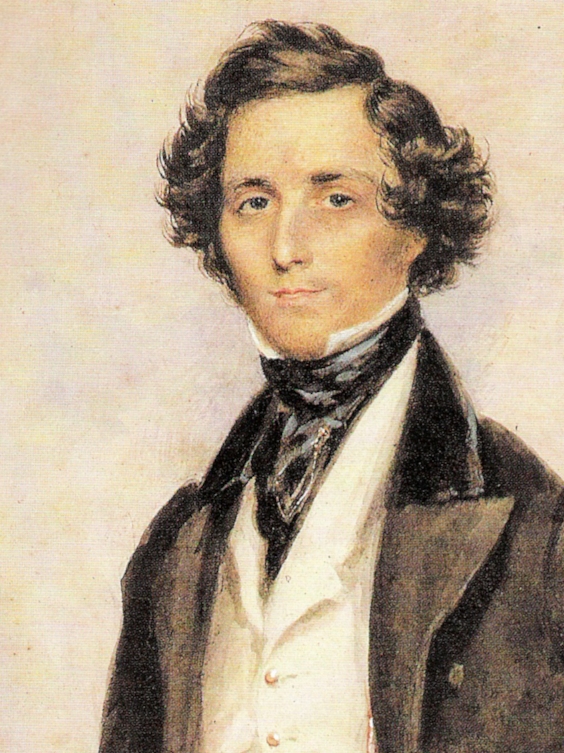
mendelssohn

On this date, January 25, 1858, Mendelssohn’s “Wedding March” was first played at the wedding of Queen Victoria’s daughter Princess Victoria, to crown prince of Prussia. This piece, written by Felix Mendelssohn’s “Wedding March” in C major, written in 1842, is one of the best known of the pieces from his suite of incidental music (Op. 61) to Shakespeare’s play A Midsummer Night’s Dream. It is one of the most frequently used pieces of wedding music, generally being played on a church organ.

It is also one of the most reviled wedding pieces for many organists and pastors today. It is a great piece of music, but it has been over done – in so many weddings, for so many years. And with the plethora of music that is available and appropriate for weddings today, there is no reason to use the “Wedding March” often. And yet, we know it will be played in many weddings each and every year. So, the next time you are at a wedding, and the organist begins to play the “Wedding March”, ask not what Mendelssohn can do for you, but ask what you can do to stop the use of Mendelssohn in weddings in the future. If you do, you will be doing each and every pastor and organist a great service, and little by little bury the “Wedding March” once and for all.

(Please, the above lines were written with this cranky reverend’s tongue firmly placed against his teeth, and is meant for the enjoyment of all those who have been unduly hurt from over-exposure to the “Wedding March”.)

Pastor Dave
On This Date — January 24, 1899

January 24, 2017
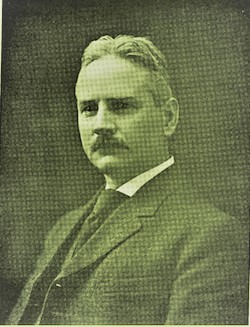
Humphrey O’Sullivan, patent, Rubber Heel

On this date, January 24, 1899, the Rubber heel is patented by Humphrey O’Sullivan.

From the patent office description:

“Be it known that HUMPHREY O’SULLIVAN, a citizen of the United States, residing at Lowell, in the county of Middlesex and State of Massachusetts, have invented certain new and useful Improvements in Heels for Boots or Shoes; and I do hereby declare the following to be a full, clear, and exact description of the invention, such as will enable others skilled in the art to which it appertains to make and use the same.

My invention relates to heels for boots and shoes; and it consists in improved means, hereinafter described and claimed, of securing elastic cushions to heels in such a manner as to unite the edges of such cushions to the heels as closely as the edges of the contiguous lifts of a heel are commonly united to each other. Such cushions are commonly of rubber, and the securing means are placed at such distances from their sides and ends as to allow them in walking to separate slightly from the leather top lifts of the heel proper, leaving a crack which takes in the mud and filth of the streets and keeps the heels dirty. I avoid this by uniting the rubber cushion to a lift of leather by means of a cement insoluble in water, as the well-known rubber cement, so that when said lift is secured to the heel of the shoe there is no separation of the cushion and said lift, and when the latter is united to what was previously the top lift of the heel these two leather lifts are secured to each other as firmly as they would be if the cushions were not used.”

humphrey-osullivan-ii

Here are some words from the periodical “Boot Shore Recorder” from their February 5, 1908 edition:

“Blessings in disguise may be all right in their way, but commend is to the genuine footwear blessings that wear no masks as they greet us. Things that need no concealment, but show their worth on the face. Among the latter today must be placed in the front rank of human blessings for shoe wearers, the elastic, soothing rubber heel. We need no longer jar our brain as we jog along the street on hard pavements.”

Blessings come in all shapes and sizes. Some are evident in our day – like the warmth of the sun, the rain that brings forth vegetation and provides water for our lives. But of all of the blessings we realize each and every day, how often do you remember to thank G-d for the invention of the rubber heel on your shoe wear? It is the little things in life that make our days just a little easier so we can do the work to which we have been called, and put forth some shoe leather to take the good news of Jesus Christ to the world. Because of the rubber heel, we no longer “jar our brain as we jog along the street…” It is with clear minds that we can share the good news.

Pastor Dave