

January 23, 2017
Book of Common Prayer
On this day, January 23, 1552, the 2nd version of the Book of Common Prayer becomes mandatory in England.
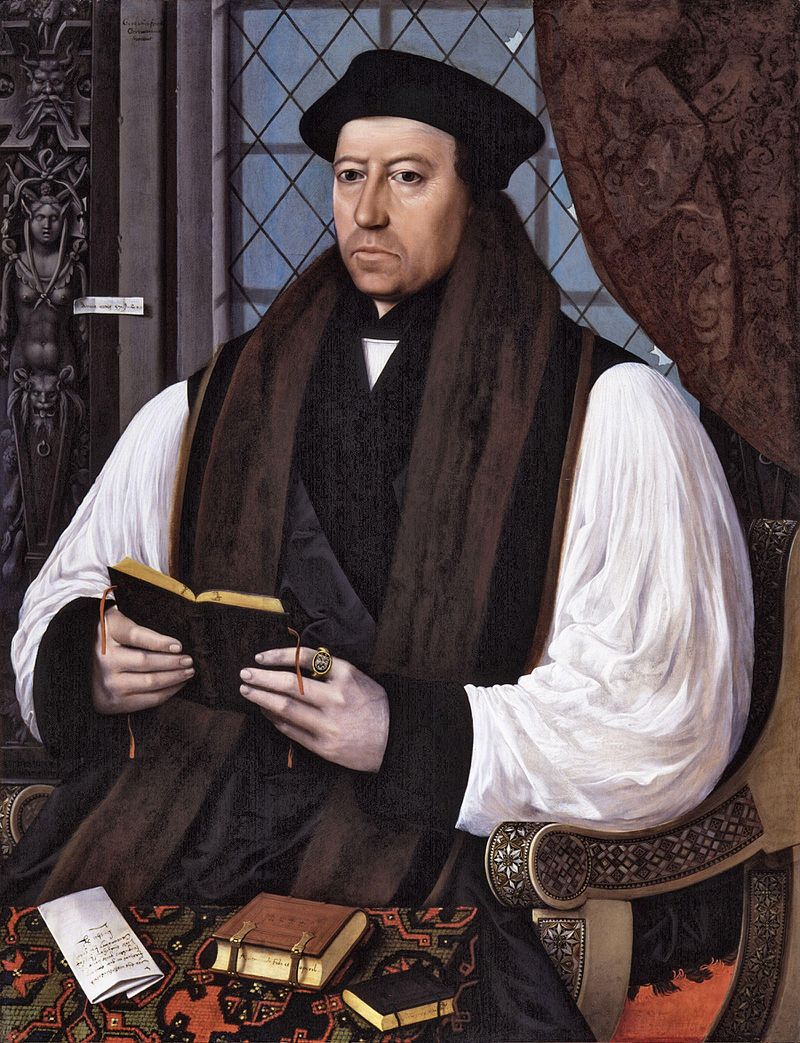
Here is the confession and absolution from the 1552 BoCP:
“ALMIGHTY and most mercyfull father, we have erred and strayed from thy wayes, lyke lost shepe. We have folowed too much the devises and desyres of oure owne hearts. We have offended against thy holy lawes. We have left undone those things whiche we oughte to have done, and we have done those. thinges which we ought not to have done, and there is no health in us: but thou, O Lord, have mercy upon us miserable offendors. Spare thou them, O God, which confesse theyr faultes. Restore thou them that be penitent, according to thy promyses declared. unto mankynde, in Christe Jesu oure Lorde. And graunt, O most merciful father, for his sake, that we may hereafter live a godly, righteous, and sobre life, to the glory of thy holy name. Amen.
The absolucion to be pronounced by the minister alone.
ALMIGHTY God, the father of oure Lord Jesus Christ, which desireth not the death of a synner, but rather that he maye turne from his wickedness and live: and hath geven power and commaundment to hys ministers, to declare and pronounce to his people, beinge penitent, the absolution and remission of their synnnes: he pardoneth and absolveth all them which truely repent, and unfeynedly believe his holy Gospel. Wherefore we beseche him to graunt us true repentaunce and his holy Spirite, that those thinges may please him, which we do at this present, and that the rest of our life hereafter may be pure and holy: so that at the last we may come to hys eternall joye, through Jesus Christ our Lord. Amen.
The Book of Common Prayer is the short title of a number of related prayer books used in the Anglican church, written by Thomas Cranmer, Archbishop of Canterbury. The original book, published in 1549 (Church of England), during the reign of Edward VI, was a product of the English Reformation following the break with the church in Rome. Prayer books, unlike books of prayers, contain the words of structured (or liturgical) services of worship. The work of 1549 was the first prayer book to include the complete forms of service for daily and Sunday worship in English. It contained Morning Prayer, Evening Prayer, the Litany, and Holy Communion and also the occasional services in full: the orders for Baptism, Confirmation, Marriage, Prayers for the Sick, and a Funeral service. The 1549 book was soon succeeded by a more reformed revision in 1552 under the same editorial hand, that of Cranmer. It was used only for a few months, as after Edward VI’s death in 1553, his half-sister Mary I restored Roman Catholic worship. Mary died in 1558 and, in 1559, Elizabeth I reintroduced the 1552 book with a few modifications to make it acceptable to more traditionally minded worshippers, notably the inclusion of the words of administration from the 1549 Communion Service alongside those of 1552.
The Book of Common Prayer (BoCP) has been an instrumental worship book for almost 500 years. The language and flow of the service of many other churches owe a great debt to the BoCP book. In fact many common phrases in English have come from the services in the BoCP. They include:
• “Speak now or forever hold your peace” from the marriage liturgy.
• “Till death us do part”, from the marriage liturgy.
• “Earth to earth, ashes to ashes, dust to dust” from the funeral service.
It is an enduring liturgical resource that still influences our worship today.
Pastor Dave
 Lutheran Schreff