

January 18, 2017
Papal Encyclical “On Christian Democracy”
On this date January 18, 1901 Pope Leo XIII publishes encyclical Graves De Communi Re, On Christian Democracy.
The Papal Encyclical is specific category of document, a kind of letter concerning Catholic doctrine, sent by the Pope and usually addressed especially to archbishops and bishops who are in communion with the Holy See. Here are two of the beginning paragraphs of “On Christian Democracy”:
“The grave discussions on economical questions which for same time past have disturbed the peace of several countries of the world are growing in frequency and intensity to such a degree that the minds of thoughtful men are filled, and rightly so, with worry and alarm. These discussions take their rise in the bad philosophical and ethical teaching which is now widespread among the people. The changes, also, which the mechanical inventions of the age have introduced, the rapidity of communication between places, and the devices of every kind for diminishing labor and increasing gain, all add bitterness to the strife; and, lastly, matters have been brought to such a pass by the struggle between capital and labor, fomented as it is by professional agitators, that the countries where these disturbances most frequently occur find themselves confronted with ruin and disaster.
At the very beginning of Our pontificate We clearly pointed out what the peril was which confronted society on this head, and We deemed it Our duty to warn Catholics, in unmistakable language,(1) how great the error was which was lurking in the utterances of socialism, and how great the danger was that threatened not only their temporal possessions, but also their morality and religion.”
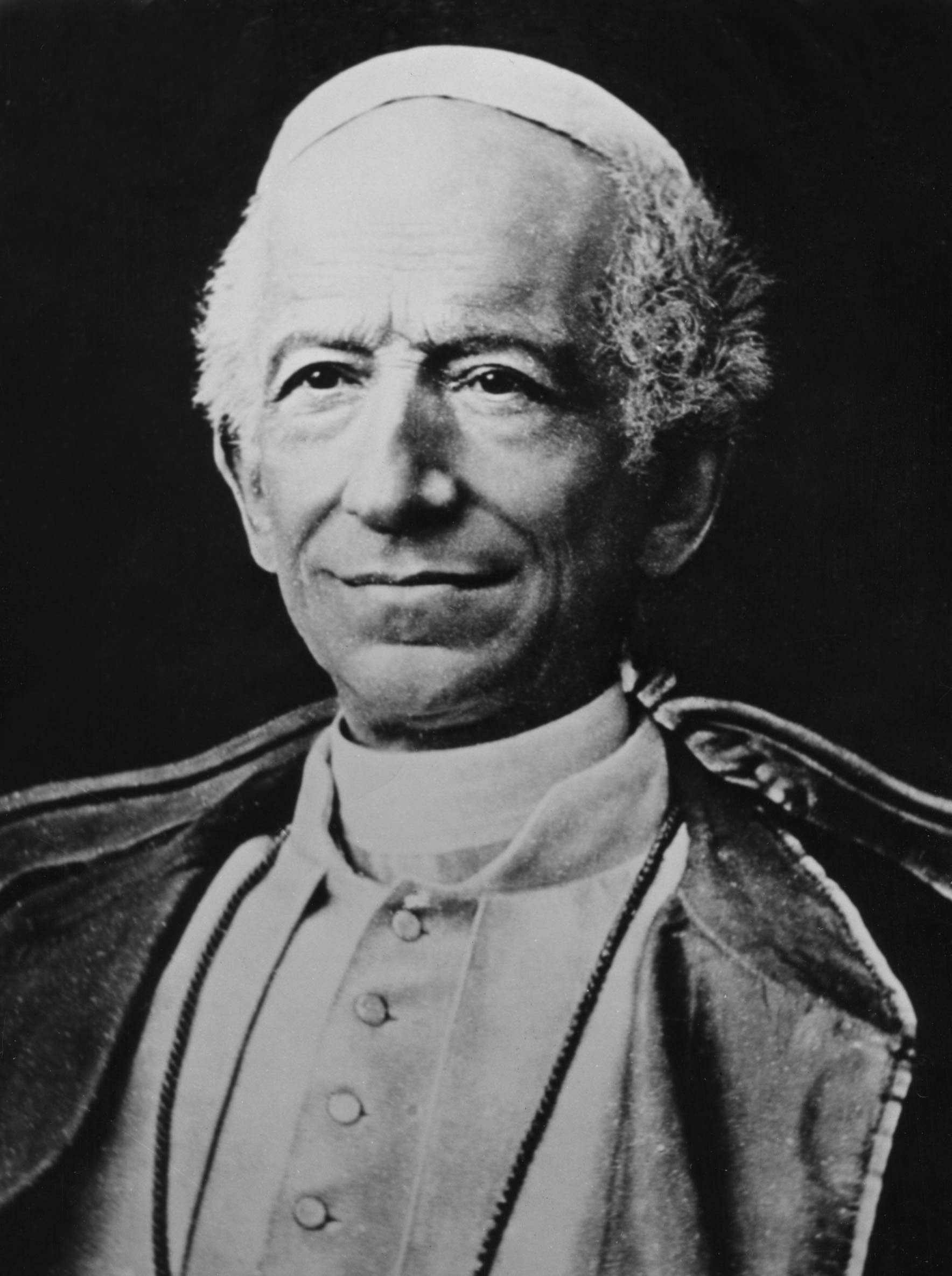
Pope Leo XIII was born in Italy March 2, 1810.
Christian democracy is a political ideology which emerged in nineteenth-century Europe under the influence of conservatism and Catholic social teaching. It was originally conceived as a combination of traditional Catholic beliefs and modern democratic ideas, including conservative moral views on marriage and abortion, and an emphasis on human rights and individual initiative. It grew to incorporate the social teaching of other Christian denominations, such as the Lutheran Church and the Reformed Church. After WWII, the Protestant and Catholic movements of the Social Gospel and Neo-Thomism (also known as scholasticism which places an emphasis on dialectical reasoning to extend knowledge by inference and to resolve contradictions), respectively, played a role in shaping Christian democracy.
One of the highlights of the Lutheran church, in this humble pastor’s opinion, has been the Full Communion Partnerships the ELCA has reached with other denominations. Currently the ELCA is in common communion with the following denominations: The Reformed Church, The United Church of Christ, The United Methodist Church, The Presbyterian Church (USA), The Episcopal Church, and The Moravian Church. The characteristics of full communion are theological and missional implications of the gospel that allow variety and flexibility. These characteristics stress that the church act ecumenically for the sake of the world, not for itself alone. They will include at least the following, some of which exist at earlier stages:
• common confessing of the Christian faith
• mutual recognition of Baptism and a sharing of the Lord’s Supper, allowing for joint worship and an exchangeability of members
• mutual recognition and availability of ordained ministers to the service of all, subject to the disciplinary regulations of other denominations
• common commitment to evangelism, witness and service
• means of common decision-making on critical common issues of faith and life
• mutual lifting of any condemnations that exist between denominations.
In the gospel of John, Jesus prays that his followers be “united” as Jesus and the Father are united. In other words Jesus prayed that his many followers would be one – One in the Spirit and One in the Lord. What has happened in the last two thousand years is the dividing and splitting of believers based on just a few differences of opinion – opinions on baptism, on the presence of Jesus in the sacraments, and even how many sacraments there should be. Now is the time for Christians to be working together, not dividing ourselves. And we need to be always looking for ways to work together with our Lutheran brethren and all who seek to know the Lord and to serve the Lord.
Pastor Dave
 Lutheran Schreff