

January 10, 2017
Thomas Paine, Political Activist, Revolutionary
“Of Monarchy and Hereditary Succession
MANKIND being originally equals in the order of creation, the equality could only be destroyed by some subsequent circumstance: the distinctions of rich and poor may in a great measure be accounted for, and that without having recourse to the harsh ill-sounding names of oppression and avarice. Oppression is often the CONSEQUENCE, but seldom or never the MEANS of riches; and tho’ avarice will preserve a man from being necessitously poor, it generally makes him too timorous to be wealthy. But there is another and great distinction for which no truly natural or religious reason can be assigned, and that is the distinction of men into KINGS and SUBJECTS. Male and female are the distinctions of nature, good and bad the distinctions of Heaven; but how a race of men came into the world so exalted above the rest, and distinguished like some new species, is worth inquiring into, and whether they are the means of happiness or of misery to mankind.” (Common Sense, Thomas Paine)
“Born in Thetford, England, Paine migrated to the British American colonies in 1774 with the help of Benjamin Franklin, arriving just in time to participate in the American Revolution. Virtually every rebel read (or listened to a reading of) his powerful pamphlet Common Sense (1776), proportionally the all-time best-selling American title, which crystallized the rebellious demand for independence from Great Britain. His The American Crisis (1776–83) was a pro-revolutionary pamphlet series. Common Sense was so influential that John Adams said, “Without the pen of the author of Common Sense, the sword of Washington would have been raised in vain.” (Wikipedia)
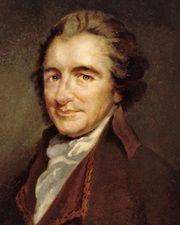
On this date, January 10, 1776, Thomas Paine published his pamphlet “Common Sense”. In this pamphlet, Thomas Paine established reasons the colonies in the New World should demand independence from Britain. According to some sources, if Paine had not written his feelings and published them, the revolution may not have happened when it did. It is interesting how the reading of, or the sharing of the written word can move people to action – of course the most powerful document that was written for just that purpose was the bible – the Old Testament in particular. Once Guttenberg invented the printing press, and different theologians like Luther and Calvin shared their views on things like baptism and the presence of Jesus in the sacraments, then the power of the Word was really felt.
We need to continue the tradition of sharing the Word of G-d through our individual and our corporate efforts. The Word has power – but it needs to be shared – or it loses its power.
Pastor Dave
 Lutheran Schreff