

December 30, 2016 – Christmas + 5
John Wycliffe, Priest
“Six days later, Jesus took with him Peter and James and John, and led them up a high mountain apart, by themselves. And he was transfigured before them, and his clothes became dazzling white, such as no one on earth could bleach them. And there appeared to them Elijah with Moses, who were talking with Jesus. Then Peter said to Jesus, “Rabbi, it is good for us to be here; let us make three dwellings, one for you, one for Moses, and one for Elijah.” He did not know what to say, for they were terrified. Then a cloud overshadowed them, and from the cloud there came a voice, “This is my Son, the Beloved; listen to him!” Suddenly when they looked around, they saw no one with them any more, but only Jesus.” Mark 9:2-8
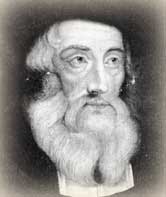
On this day, December 30, 1384 John Wycliffe was dying from a stroke, and so many clerics, even those who were his enemies gathered around his death bed to hear one last word – possibly he might recant. But there would be no recanting – he could not speak as a result of his stroke. But even if he could speak, it is doubtful that he would recant. Here is a brief synopsis of his life:
“John Wycliffe was the most famous priest of his day. His learning was immense. He had been a leading scholar at Oxford and a chaplain to the King of England. More to the point, he spoke out boldly against the errors of the popes, the organizational hierarchy of the Roman Church, and the corruption of the clergy in his day. He criticized not only the organization of the medieval church but its theology as well and argued for a return to the Scriptures. Pastors should live lives of simplicity and holiness, he taught, shepherding their flocks (people)–not plundering them.
If the people in England were to know the truth, Wycliffe reasoned that they must have the Word of God in their own language. Under his direction, the Bible was translated into English for the first time, although the job was not completed by his associates until 1395, eleven years after his death. Repeatedly condemned and burned by church authorities, copies of Wycliffe’s Bible continued in use for over a century, until printed Bibles took their place. This work greatly influenced William Tyndale who made the first printed translation of the New Testament in English.
We can still puzzle out the meaning of John Wycliffe’s words. Here is how he describes the transfiguration:
“And aftir sixe dayes Jhesus took Petre, and James, and John and ledith [led] hem [them] by hem selve aloone in to an high hil ; and he is transfigurid before hem. And his clothis ben maad [were made] schynynge [shining] and white ful moche [much] as snow, and which maner clothis a fullere [cloth worker], or walkere [worker] of cloth, may not make white on erthe. And Helye [Elijah] with Myses apperide [appeared] to hem, and thei weren [were] spekynge [speaking] with Jhesu.” (John Wycliffe on His Death Bed Diana Severance, Ph.D., Christianity.com)
John Wycliffe produced the first hand-written English language bible manuscripts in the 14th century. With the help of assistants, Wycliffe produced dozens of these English language manuscripts of the bible. They were translated out of the Latin Vulgate (a late fourth-century Latin translation of the Bible that became the Catholic Church’s official Latin version of the Bible) which is the only source text he had. The Pope was so infuriated by his translation of the Bible into English, that 44 years after Wycliffe had died, he ordered the bones to be dug-up, crushed, and scattered in the river! Even in death people may hold us in contempt for our faith – but even in death, Christ has won the victory for all believers.
Pastor Dave
 Lutheran Schreff