
Justification by Grace through Faith

       February 25, 2016

Justification by Grace through faith is the single most important theological concept in the Lutheran church. All things flow out of the Grace that comes through the cross of Jesus Christ.  We have Scriptural support for this important understanding:

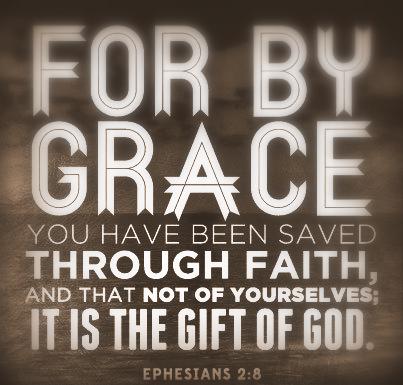
Therefore, since we have been justified through faith, we have peace with God through our Lord Jesus Christ” Romans 5:1 “For it is by grace you have been saved, through faith–and this is not from yourselves, it is the gift of God” Ephesians 2:8

The doctrine of justification,” insisted Luther, “is the chief article of the whole Christian doctrine, which comprehends the understanding of all godliness.” Luther struggled with finding the G-d of love. Luther came to understand justification as being entirely the work of God. Against the teaching of his day that the righteous acts of believers are done to earn the love of God, Luther asserted that Christians receive that righteousness entirely from outside themselves; that righteousness not only comes from Christ, it actually is the righteousness of Christ, imputed to us (rather than infused into us) through faith. “That is why faith alone makes someone just and fulfills the law,” said Luther. “Faith is that which brings the Holy Spirit through the merits of Christ”. Thus faith, for Luther, is a gift from God, and “. . . a living, bold trust in God’s grace, so certain of God’s favor that it would risk death a thousand times trusting in it.”

What is most important to understand about Grace and Faith is that they are both a gift – Grace a gift from Christ through the cross – Faith a gift through the Holy Spirit that comes to us through means including word and Sacrament. Our response is to do the works of Christ, not so that we earn G-d’s love, but because G-d loves us so much, this joy drives us to be the hands and feet of Christ.

Pastor Dave

The Small Catechism

                              February 24, 2016

Luther’s Preface to the Small Catechism

“Martin Luther, to all faithful and godly pastors and preachers: grace, mercy, and peace be yours in Jesus Christ, our Lord. The deplorable, miserable conditions which I recently observed when visiting the parishes have constrained and pressed me to put this catechism of Christian doctrine into this brief, plain, and simple form. How pitiable, so help me God, were the things I saw: the common man, especially in the villages, knows practically nothing of Christian doctrine, and many of the pastors are almost entirely incompetent and unable to teach. Yet all the people are supposed to be Christians, have been baptized, and receive the Holy Sacrament even though they do not know the Lord’s Prayer, the Creed, or the Ten Commandments and live like poor animals of the barnyard and pig pen. What these people have mastered, however, is the fine art of tearing all Christian liberty to shreds. Therefore dear brothers, for God’s sake I beg all of you who are pastors and preachers to devote yourselves sincerely to the duties of your office, that you feel compassion for the people entrusted to your care, and that you help us accordingly to inculcate this catechism in the people, especially the young. If you cannot do more, at least take the tables and charts for catechism instruction and drill the people in them word for word…”

Thus begins the preface to the Small Catechism written by Martin Luther. The opening lines say it all – The deplorable, miserable conditions – no one knew the Lord’s Prayer, the Creeds or the Ten Commandments. And so he took it upon himself to give the pastors a teaching tool – and we still use this teaching tool today in our catechism classes. Luther admonished them, but also encouraged them to stick with it, not to give up, and to continue it year after year.

This continues to be our tradition in teaching the faith in the Lutheran church. And, we all could use a refresher from time to time. This teaching tool is still vital to our faith understanding today.

Pastor Dave