

December 16, 2015
“In the second year of King Darius, in the sixth month, on the first day of the month, the word of the Lord came by the prophet Haggai to Zerubbabel son of Shealtiel, governor of Judah, and to Joshua son of Jehozadak, the high priest: Thus says the Lord of hosts: These people say the time has not yet come to rebuild the Lord’s house. Then the word of the Lord came by the prophet Haggai, saying: Is it a time for you yourselves to live in your paneled houses, while this house lies in ruins?” Haggai 1:1 – 4
“But it is locally true that G-d has always chosen a place for His local habitation with men. The place where His people meet with Him should be suitable for such an occasion, neither in barn nor opera-house, Jewish Temple nor…Mosque, factory nor theater, but in a Christian Church. On such an occasion church should harmonize with the divine purpose in worship. Architecture, sculpture and painting tell the pictured story, while the other arts, poetry, music, and eloquence, tell the same story to other sense-perceptions and fill the storied temple with the words and spirit of worship.” (“Fundamental Principles of Christian Worship” in Memoirs of the Lutheran Liturgical Association, Volume I, 1906; J. C. F. Rip (1856 – 1933), “For All The Saints” volume III, p. 66)
It has been an honored tradition for Lutherans to hold their worship services in a church. This honored tradition has held together for almost 500 years. When the early German Lutherans came to America following the devastation of the Thirty Years War (1618 – 1648) they came to escape disease, famine and starvation. Upon arriving, they built churches in the center of their living spaces. It soon became clear that their faith lives, critical to their survival, we’re not adequately being met with the sparse number of pastors coming from Germany. Pastors like Justus Falckner, the first Lutheran to be ordained in America (November 24, 1703), came to see to the spiritual needs of the people. Even in the earliest times in this country, worshiping in a church with ordained leadership was the norm and practice.
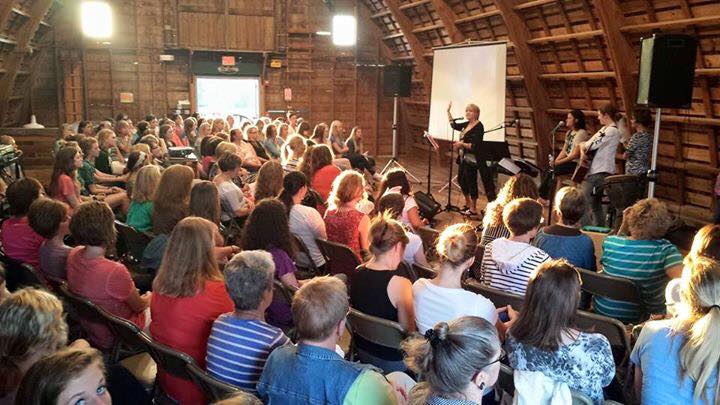
Today, well, we are seeing the emergence of alternate worship services and alternate worship spaces. It is no longer possible to maintain large worship spaces that require large sums of money for upkeep. With the change in the numbers of worshipers, it is becoming clear that the worship space must also change. But, whether it is in the home, in the fire hall, or in the barn, in this day and age all can be transformed in music, art, picture, and word to be welcoming spaces for worship.
Pastor Dave
 Lutheran Schreff