
Capable People — Rev. David J. Schreffler


imageSeptember 22, 2015

“A capable wife who can find?
She is far more precious than jewels.
The heart of her husband trusts in her,
and he will have no lack of gain.
She does him good, and not harm,
all the days of her life.
She seeks wool and flax,
and works with willing hands.
She is like the ships of the merchant,
she brings her food from far away.
She rises while it is still night
and provides food for her household
and tasks for her servant-girls.
She considers a field and buys it;
with the fruit of her hands she plants a vineyard.
She girds herself with strength,
and makes her arms strong.”
Proverbs 31:10-17

We need more such voices, and I’d suggest Proverbs 31 – as complex as it certainly is – might be one of them. Think about it: this Sunday countless girls will be sitting in church listening to this passage. How many will hear it interpreted not as one more ideal they can’t live up to but instead as a powerful voice that invites them to imagine that they have worth in and of themselves, that they can do anything they set their minds to, and that their value rests in their character and accomplishments, not in the rosy glow of their skin. That’s a sermon I hope my daughter hears. And, for that matter, my son as well.” David Lose, What the Bible Says – And Doesn’t Say – About Women (Posted: 09/22/2012)

I have often used this text when preaching a funeral sermon for a woman who has served as a faithful wife, mother, and other appropriate titles if they are warranted. It is a powerful statement for any woman who has served her family in so many roles — many in the expected roles, and many in unexpected roles. It is interesting that it begins with the statement “Who can find a capable wife?”, and then goes on to list her accomplishments as if there were such a person standing right in front of the writer — or someone the writer has in mind. I personally do not think it is that hard to find a capable wife — or a capable husband in this world. I believe it is more important not to put socially or culturally determined roles on anyone — and allow all people to serve their families, their communities, and their churches in all of the roles they feel called.

Pastor Dave
Pruning — Rev. David J. Schreffler


imageimage

September 21, 2015

“Who is wise and understanding among you? Show by your good life that your works are done with gentleness born of wisdom. But if you have bitter envy and selfish ambition in your hearts, do not be boastful and false to the truth. Such wisdom does not come down from above, but is earthly, unspiritual, devilish. For where there is envy and selfish ambition, there will also be disorder and wickedness of every kind. But the wisdom from above is first pure, then peaceable, gentle, willing to yield, full of mercy and good fruits, without a trace of partiality or hypocrisy. And a harvest of righteousness is sown in peace for those who make peace.”
James 3:13-18

The harvest of our life’s efforts is really no different, as the author of James makes clear in this week’s epistle lesson. Just as the effort of the grower and pickers is reflected in the bins of lovely, fragrant fruit, so are the works of our life reflected in the fruits of our deeds. If we sow seeds of dissent in soil laden with envy and selfishness, our fruit will end up bruised and rotten from the core. Conflict and disputes leave unsightly pocks and blemishes. Slavish attention to wants and unbridled covetousness are pests every bit as damaging, ugly, and annoying as the common stink bug, infesting our lives and distracting us from the work at hand. I doubt any of us would make it past the “seconds” bin.

In welcoming and serving the weak, the marginalized, the poor, and the outcast, we grow toward a righteous harvest where all have a place at the table and an open invitation to enjoy God’s plenty. Getting there—from seed to mature harvest— is not easy; it is simple, but not easy. It is much more difficult to yield to others and put aside one’s own wants and desires. It is more difficult to sacrifice a branch or discard excess fruit that will crowd out the good. Yet we must prune our selfishness and greed if we are to grow, if we are to produce mature fruit for the table. It is tough and it hurts, but it is a necessary part of the process that will yield fruit full of mercy and a harvest of peace.” Rev. Sharron Blezard A Righteous Harvest  September 19, 2012

Selfish ambition. I have been struggling with selfish ambition this summer. Some of my feelings come from my own personal experiences with how I view my ministry, and other feelings come from what I see in the church today. If there is something in my life that I feel needs to be pruned, it is selfish ambition. “Why do I do the things that I do?” This is the question I need to ask myself constantly, and the question we all need to ask ourselves as we move about this world trying to live out our faith.

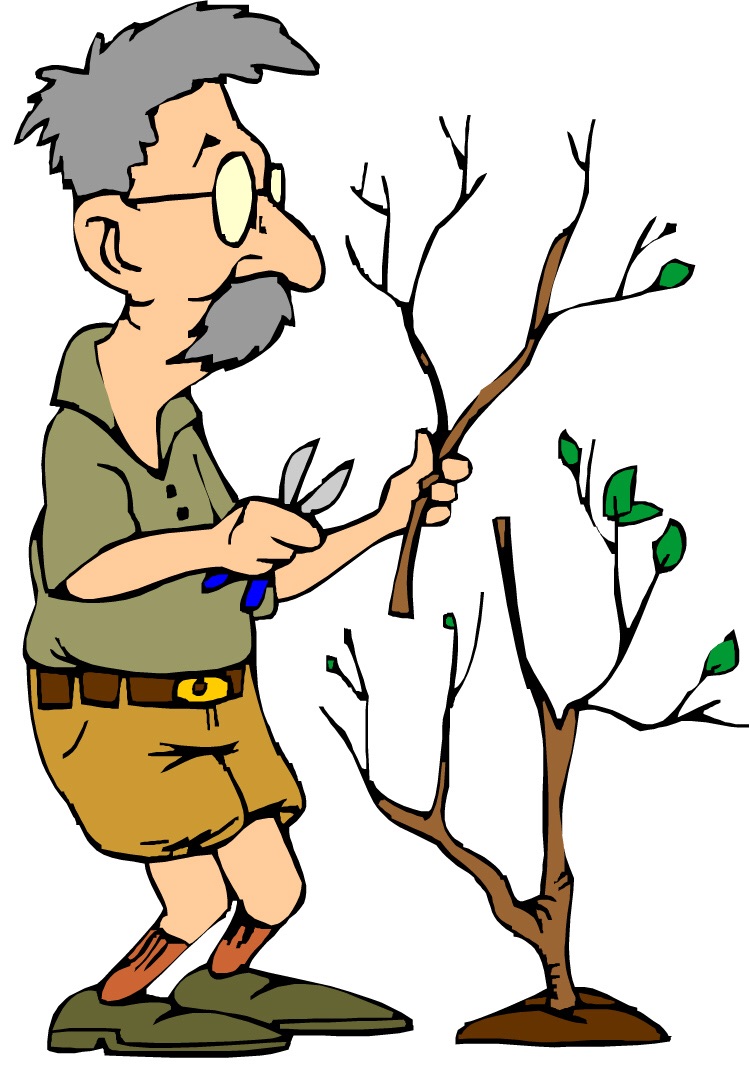
Recently my wife and I were pruning branches off a tree that stands in our front yard. We were pruning the branches because the tree was growing unevenly, out of control, and was interfering with strangers who wanted to walk on the sidewalk in front of our house. These are the reasons we prune certain behaviors from our lives. Sometimes we step back and see that our lives have become uneven and out of control because personal decisions and behaviors are impeding with our own progress in life and faith.

Pruning is tough — and as Sharron Blezard states, “it hurts” — but it is always necessary in the life of faith.

Pastor Dave